The Polk County Treasurer in Iowa manages county funds, oversees tax collection, and ensures accurate financial records for public services. This office handles property tax payments, vehicle registration, and title transfers while maintaining compliance with state and local regulations. Residents rely on the Treasurer to track county revenue, coordinate disbursements, and provide secure, efficient payment methods. The office implements digital tools and official records to simplify transactions, reduce errors, and support transparent fiscal management. By monitoring collections and collaborating with other departments, the Treasurer safeguards taxpayer resources and sustains essential county operations.
Beyond tax collection, the Polk County Treasurer facilitates vehicle licensing, renewal services, and title management for personal and commercial vehicles. Staff offers multiple payment options, including in-person, online, and mail-in services, ensuring accessibility for all residents. The office also addresses questions about assessments, installment plans, and county fund allocations with professionals. Through systematic recordkeeping and timely financial reporting, the Treasurer promotes accountability and operational efficiency. Residents benefit from organized processes that make property and vehicle transactions predictable, secure, and well-documented.
What is the Polk County Treasurer?
The Polk County Treasurer in Iowa manages county revenue https://www.polkcountyiowa.gov/treasurer/ and oversees important financial services for residents. This office handles property taxes, vehicle registrations, and other financial transactions critical to local government operations.
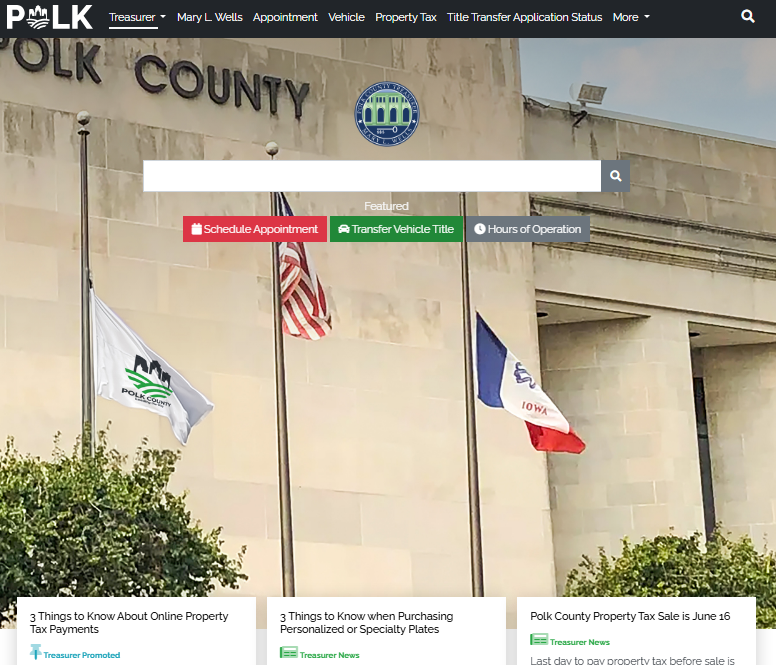
The Polk County Treasurer’s office is responsible for several key tasks that directly impact residents and businesses. These include:
- Property Tax Collection: The office collects property taxes for homes and businesses, ensuring timely distribution to schools, municipalities, and public services.
- Vehicle Titles and Registration: Residents can title vehicles, renew registrations, and manage lien releases for personal or commercial vehicles.
- Security Interests and Lien Releases: The office maintains records for secured interests on property and vehicles, and releases liens when obligations are fulfilled.
- County Revenue Management: It collects and manages revenue that funds public services, making it a central part of Polk County’s fiscal operations.
While the Treasurer manages these critical services, there are certain tasks it does not handle:
- Recorder Functions: Recording deeds, mortgages, or other legal documents is managed by the Polk County Recorder.
- Assessor Functions: Determining property value for tax purposes is handled by the Polk County Assessor.
- Auditor Functions: Maintaining county financial records and conducting audits fall under the Polk County Auditor.
Steps for First-Time Visitors
For residents visiting the Polk County Treasurer’s office for the first time, the process can be straightforward when planned carefully:
- Check Needed Documents: Bring proof of ownership for vehicles or property, identification, and any forms required for tax or lien services.
- Choose Your Service: Decide whether the visit is for vehicle registration, property tax payment, or lien release.
- In-Person or Online Options: Many services can be completed online through the county treasury portal, while some require in-person verification.
- Payment Methods: The office accepts payments via cash, check, and approved digital methods. Confirm payment options before arrival.
- Follow-Up: Keep receipts and confirmation numbers for records, especially for lien releases or property tax credits.
By handling these responsibilities efficiently, the Polk County Treasurer ensures residents can manage vehicle and property finances securely. Regular updates on tax credits, registration deadlines, and lien releases help residents stay current and avoid penalties.
How to Plan Your Visit
Visiting the Polk County Treasurer in Des Moines, Iowa, is straightforward with the right preparation. Planning can save time and ensure the required services are completed efficiently. The Polk County Treasurer’s office offers services that may require appointments, such as vehicle registration, property tax payments, and certain title services. These appointments can be scheduled online or by phone, and reserving a spot is recommended during peak hours. Walk-ins are accepted for some services, but availability is limited and wait times may be longer.
Appointment Requirements by Service Type
Certain services require scheduled appointments to streamline processing:
- https://www.polkcountyiowa.gov/treasurer/appointments/
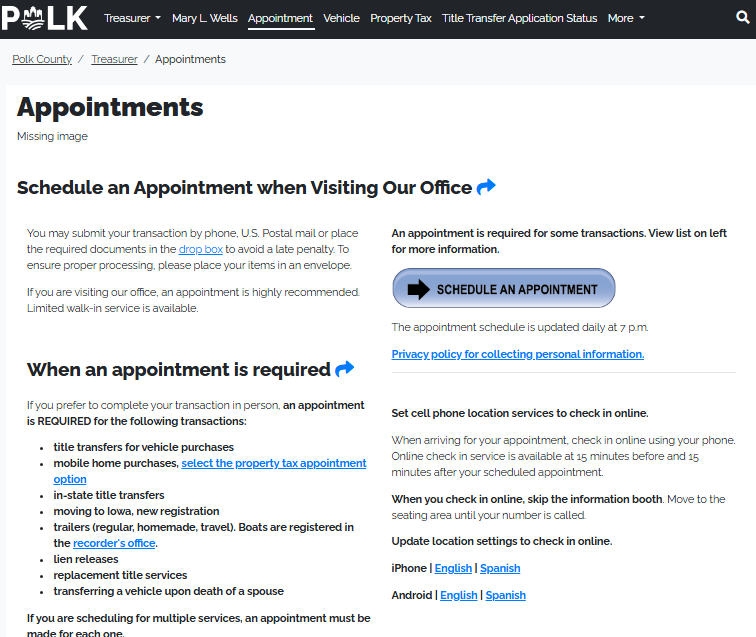
- Vehicle Title Transfers and Registrations: Appointments ensure a faster, dedicated time slot.
- Property Tax Payments and Receipts: Walk-ins are accepted, but appointments help avoid peak-hour congestion.
- Special Requests or Complex Transactions: Scheduling in advance is strongly encouraged to secure counter service.
Walk-In Limitations and Wait Times
Walk-in service is available but can be limited during busy periods. Peak hours, such as Monday mornings and tax deadlines, often result in longer wait times. Visitors can reduce wait times by arriving mid-morning or mid-afternoon, when the office is less busy.
Drop Box Services
The Polk County Treasurer provides secure drop boxes for simple payments and documents. Key points include:
- Locations: Main office at 111 Court Avenue, Des Moines, Iowa, and satellite offices.
- Accepted Items: Payments, forms, and certain applications.
- Instructions: Include payment slips, clearly mark documents, and use envelopes if required.
Vehicle Services: Titles, Registrations & Plates
The Polk County Treasurer in Iowa handles all vehicle-related services https://www.polkcountyiowa.gov/treasurer/vehicle/, including title transfers, registration renewals, and specialty plates. Residents can complete most tasks in-person or online, ensuring compliance with Iowa vehicle laws.
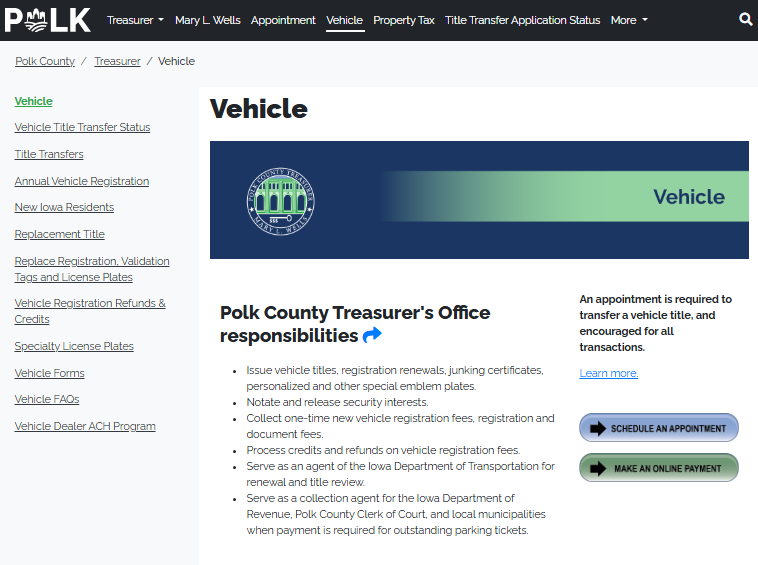
Title Transfers
Transferring a vehicle title in Polk County is straightforward and requires a few essential steps:
- Obtain the Current Title: Ensure the seller signs the title, noting the sale date and purchase price.
- Complete the Application: Fill out the Iowa Vehicle Title Application form provided by the Treasurer’s office.
- Lien Release: If a lien exists, provide the official lien release from the financial institution.
- Pay Fees: Submit the required title transfer fee, which varies depending on the vehicle type and registration status.
- Receive New Title: Once processed, the new title is issued to the vehicle owner, usually within a few weeks.
For replacement titles, the Polk County Treasurer offers a process to request a duplicate in case of loss, damage, or theft.
Registration Renewals
Annual vehicle registration is required for all Iowa residents. The process is simple:
- Renew Online or In-Person: Registrations can be renewed on the Polk County Treasurer’s website or at the office.
- Provide Vehicle Information: Have your license plate number and current registration details ready.
- Pay Renewal Fees: Fees depend on vehicle type, age, and weight.
- Receive Registration & Sticker: A new registration card and license plate sticker are issued once payment is processed.
Iowa residents must also provide proof of insurance (SR-22 if required) to complete registration.
Specialty and Personalized Plates
Polk County offers specialty plates to support causes, universities, or showcase unique designs. Personalized plates allow custom letter and number combinations. To request these plates:
- Complete the specialty or personalized plate application.
- Pay applicable fees, which may be higher than standard plates.
- Wait for processing; specialty plates often take several weeks to arrive.
These plates can enhance vehicle identity while supporting local programs or charitable initiatives.
Refunds and Credits
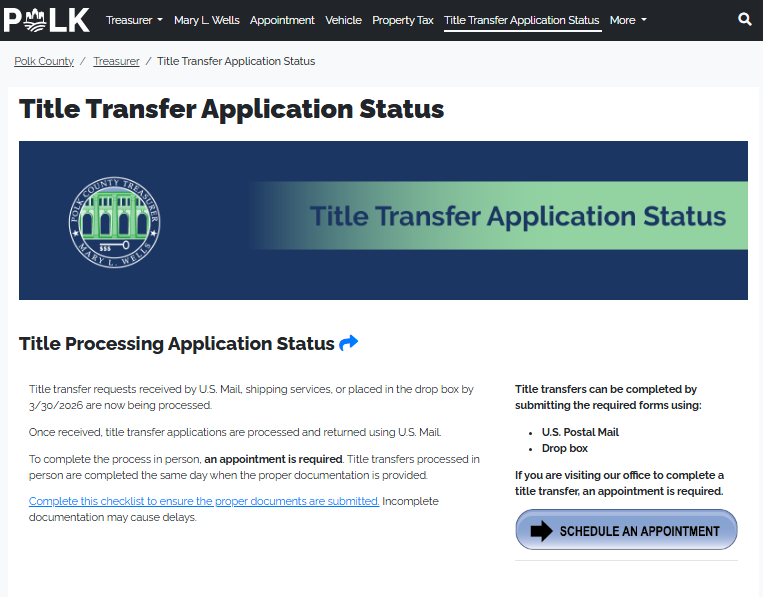
Refunds are available if a vehicle is sold, transferred, https://www.polkcountyiowa.gov/treasurer/title-transfer-application-status/, or deregistered before the registration period ends. Credits can be applied toward future registration fees. The Treasurer’s office maintains clear records and can assist in calculating prorated refunds.
Property Tax Services Made Simple
Paying property taxes in Polk County is straightforward with clear schedules and multiple payment options. The Polk County Treasurer’s office in Iowa provides online tools, in-person services, and step-by-step guidance to manage tax obligations efficiently.
Property taxes are due twice a year in Polk County, following a semiannual schedule. The first half is due on March 31, and the second half is due on September 30. Taxpayers can make payments online, by mail, or in person at the Treasurer’s office. Online payments are secure, fast, and allow residents to track their payment history and view details for each property. In-person payments can be made with cash, check, or credit card at the main office.
Online and In-Person Payment Options
Using the Polk County Treasurer’s online payment system allows property owners to:
- https://www.iowataxandtags.org/

- Parcel lookup results for each property
- Check past payments and current balances
- Pay taxes using a bank transfer or a credit card
- Print receipts instantly for record-keeping
For those who prefer visiting the office, the Treasurer’s staff can assist with:
- Cash or check payments
- Setting up payment plans
- Clarifying tax sale instructions and redemption options
Redeeming Tax Sales
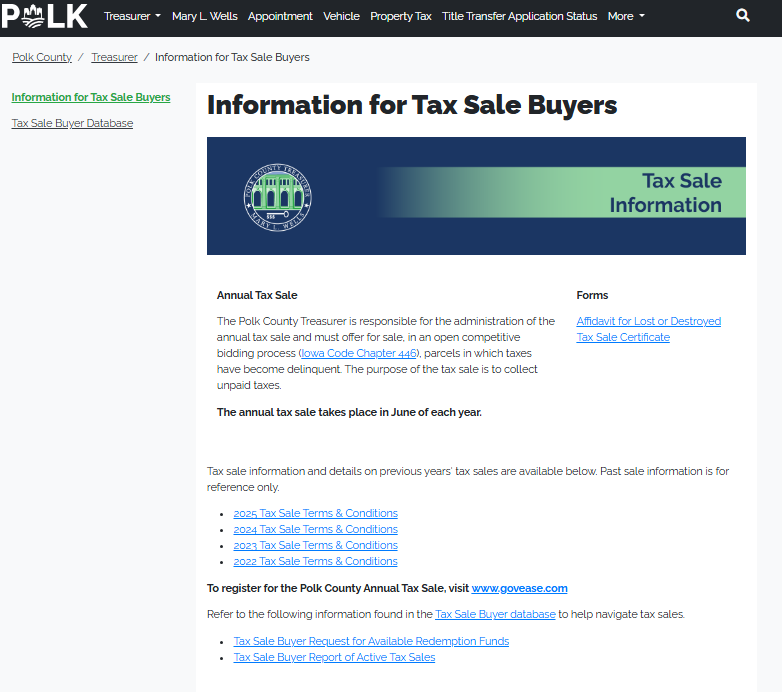
If a property has been sold for unpaid taxes, the Polk County Treasurer’s office in Iowa provides a clear tax sale redemption process. Property owners or interested buyers can:
- https://www.polkcountyiowa.gov/treasurer/information-for-tax-sale-buyers/
- Identify the property through parcel lookup.
- Calculate the total owed, including interest and penalties.
- Submit payment in person or by certified mail to redeem the property.
This process ensures delinquent taxes are resolved while protecting property rights.
Steps Property Tax Management
Managing property taxes can be simplified by following these steps:
- Check your parcel: Use the county’s online tool to confirm property details.
- Review due dates: Keep track of March 31 and September 30 deadlines.
- Select payment method: Online, mail, or in-person.
- Track payments: Maintain receipts and check payment history regularly.
- Handle tax sales: Follow official instructions if redemption is needed.
By combining timely payments, proper tracking, and familiarity with the Treasurer’s online resources, residents can handle Polk County property taxes efficiently and avoid penalties.
Choosing the Right Payment Channel
The Polk County Treasurer in Iowa offers multiple ways to pay taxes and fees, each suited for different needs. Choosing the right payment channel can save time, reduce errors, and prevent late fees.
Online Payment Portal
The online payment portal is often the fastest and most convenient option for residents. Taxpayers can pay property taxes, vehicle fees, and other charges directly from their computer or mobile device. Benefits include instant confirmation and the ability to schedule payments in advance. Polk County residents can use the official portal.
Mail and Dropbox Submissions
For those who prefer traditional methods, mail or drop box submissions remain available. Tax payments can be mailed with checks or money orders, or dropped in secure boxes at the Treasurer’s office. Advantages include a paper trail and accessibility for residents without online access. Limitations include longer processing times and potential postal delays.
In-Person Counter Payments
Paying in person at the Treasurer’s office allows immediate confirmation and personal assistance from staff. This method is ideal for complex payments or questions about lien releases or SR-22 forms. The main drawback is the need to travel to the office and wait in line during business hours.
New to Iowa? Start Here
If someone is moving to Polk County, Iowa, there are key steps to get settled quickly. New residents should handle voter registration, vehicle title transfers, and license plate updates early to stay compliant.
Settling in Polk County begins with a clear step-by-step plan. New residents need a few essential documents, including proof of Iowa residency, a valid ID, and vehicle ownership papers if bringing cars from out-of-state. For voter registration, the Polk County Auditor’s online portal allows quick registration for elections. Vehicle title and registration transfers are handled by the Polk County Treasurer’s office in Iowa, where residents can update their out-of-state vehicles, obtain license plates, and even order specialty plates.
Steps for new residents:
- Voter Registration: Submit ID and proof of residence online or in person.
- Title Transfers & Vehicle Registration: Bring current registration, title, and proof of insurance.
- Driver’s License Update: Apply at a local Iowa DOT office with residency proof.
- Check Local Services: Explore property tax accounts and available online portals.
For residents moving vehicles from another state, note that out-of-state vehicle transfers require lien release documents if applicable. The Treasurer’s office also handles replacement titles, registration renewals, and specialty plates requests. Following this plan ensures a smooth transition without unnecessary delays or fees.
Common Pitfalls to Avoid
New and returning residents often make simple mistakes that can cost time or money. Late property tax payments, incomplete title transfers, and incorrect service selection are the most frequent errors.
Avoid these common issues:
- Appointment mistakes: Book online when possible to prevent long wait times.
- Wrong payment methods: Polk County Treasurer, Iowa, accepts checks, cash, and most cards; verify accepted methods before visiting.
- Missing documents: Double-check all IDs, proof of ownership, and residency papers before heading to the office.
Preparing documents in advance and confirming the correct service type helps avoid extra trips. For example, choosing vehicle registration instead of title transfer can delay processing. Following this checklist reduces late fees, appointment errors, and processing delays, ensuring interactions with the Treasurer’s office remain smooth and efficient.
Office Location, Hours & Contact Information
The Polk County Treasurer’s office in Des Moines, Iowa, is open to assist residents with property taxes, vehicle services, and other county-related financial matters. Visitors can find the complete office address, department-specific phone numbers, and current lobby wait times for a smooth visit.
Office Address & Location
The Polk County Treasurer’s office is conveniently located at:
- Polk County Treasurer
- 123 E. Grand Avenue
- Des Moines, IA 50309
This central location is easily accessible via major roads, including Interstate 35 and U.S. Route 69, and offers parking for visitors. The building hosts several counters to handle vehicle registration, property tax payments, and other treasurer services.
Office Hours
The office maintains consistent hours for public service:
- Monday–Friday: 8:00 AM – 4:30 PM
- Closed: Weekends and county holidays
Residents are encouraged to plan their visits early in the day to avoid peak wait times, especially near tax deadlines or vehicle registration renewal periods.
Department Phone Numbers
For quicker assistance, the Polk County Treasurer provides direct phone lines for specific services:
| Department | Phone Number |
|---|---|
| Vehicle Services | (515) 286-3250 |
| Property Tax Payments | (515) 286-3080 |
| General Inquiries | (515) 286-3080 |
Calling the correct department can save time and provide accurate answers for title transfers, lien releases, or tax payment questions.
(FAQs) About Polk County Treasurer
The Polk County Treasurer’s Office answers common questions from residents about payments, vehicle services, and property matters. This FAQ section provides clear guidance for handling routine transactions efficiently and quickly. Residents can find answers on title transfers, tax payments, vehicle registration, and more.
Scheduling Vehicle Services?
Residents can schedule appointments for vehicle services online or by phone to avoid long waits. The online portal allows selecting services such as registration, title transfers, and license plates. Phone appointments are available by calling (515) 286-3080. Bringing all required documents ensures faster service. Preparing insurance, a vehicle title, and a valid ID before the appointment helps avoid delays.
Title Transfers and Required Documents?
To complete a title transfer, residents must provide all necessary documents. These include the original vehicle title, bill of sale, odometer disclosure statement (for vehicles under 10 years), valid ID, and proof of insurance. Submitting everything at once prevents delays and ensures the process goes smoothly. The office allows tracking of submitted title applications online or via phone.
Property Tax Payments and Online Services?
Property taxes can be paid securely online using debit/credit cards, e-checks, or bank transfers. Residents can also use the 24/7 drop box at 123 E. Grand Avenue, Des Moines, IA 50309. Parcel lookup tools are available online to review assessed values and past tax history. Paying online generates instant receipts, helping residents manage tax obligations efficiently.
Vehicle Registration and Renewals?
Vehicle registration renewals are available online, by mail, or in person. Online renewal provides immediate confirmation and saves time. Residents need the current registration, proof of insurance, and a payment method. New residents should update voter registration and title information when bringing in an out-of-state vehicle. Using online services reduces counter wait times.
Avoiding Delays at the Counter?
Delays often occur due to incomplete forms or missing documents. Residents should verify paperwork, use online tools, and confirm accepted payment methods before visiting. Ensuring vehicle inspections are complete, if required, also speeds up service. Simple preparation prevents frustration and keeps the process smooth for everyone.