The Polk County Sheriff Iowa office enforces the law, maintains order, and ensures public safety across the county. The sheriff’s team handles patrols, criminal investigations, emergency response, and jail operations while collaborating with local agencies to reduce crime. Residents rely on the office for timely information, sheriff contacts, and actionable alerts that enhance community security. Every effort focuses on protecting neighborhoods, supporting courts, and delivering responsive law enforcement in both urban and rural areas.
Serving Iowa Polk County Sheriff, the office also manages civil services, court duties, and inmate supervision, providing structured, accountable operations for residents and legal entities. Public safety programs, including crime prevention initiatives, safety workshops, and neighborhood outreach, strengthen citizen trust and engagement. Clear communication channels, accessible sheriff contacts, and prompt response protocols ensure that law enforcement meets both routine and urgent needs efficiently. This commitment creates a safer environment and demonstrates the sheriff’s dedication to maintaining law and order countywide.
What is the role of the Polk County Sheriff?
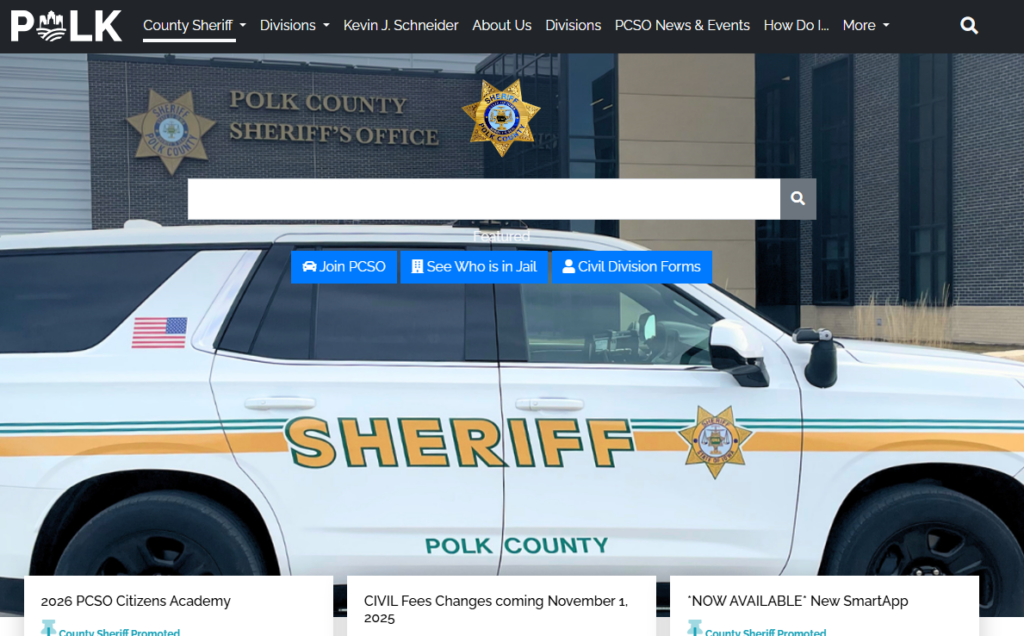
The Polk County Sheriff in Iowa is the chief law enforcement https://www.polkcountyiowa.gov/county-sheriff/ officer for the county, responsible for maintaining public safety and enforcing the law. The sheriff’s office oversees deputies, patrol operations, and coordination with local police departments to ensure community security.
Authority and Jurisdiction
The authority and jurisdiction of the Polk County Sheriff cover all unincorporated areas within the county and extend to providing support to municipalities when needed. Deputies handle criminal investigations, traffic enforcement, and emergency response, ensuring law enforcement coverage across both urban and rural regions.
Mission and Public Safety Impact
The sheriff’s mission statement focuses on protecting residents, reducing crime, and promoting public trust. By prioritizing patrols, rapid response, and community engagement, the office maintains a safe environment for all residents. Public safety programs, neighborhood initiatives, and collaboration with schools show how the office impacts the community beyond routine law enforcement.
Collaboration with Municipal Police
The relationship with municipal police strengthens overall county security. The sheriff’s office assists city police departments with investigations, major incidents, and specialized services like K-9 units or SWAT support. Regular communication and shared resources help coordinate responses, ensuring both county and city jurisdictions are protected efficiently.
Meet the Elected Sheriff and Leadership Team
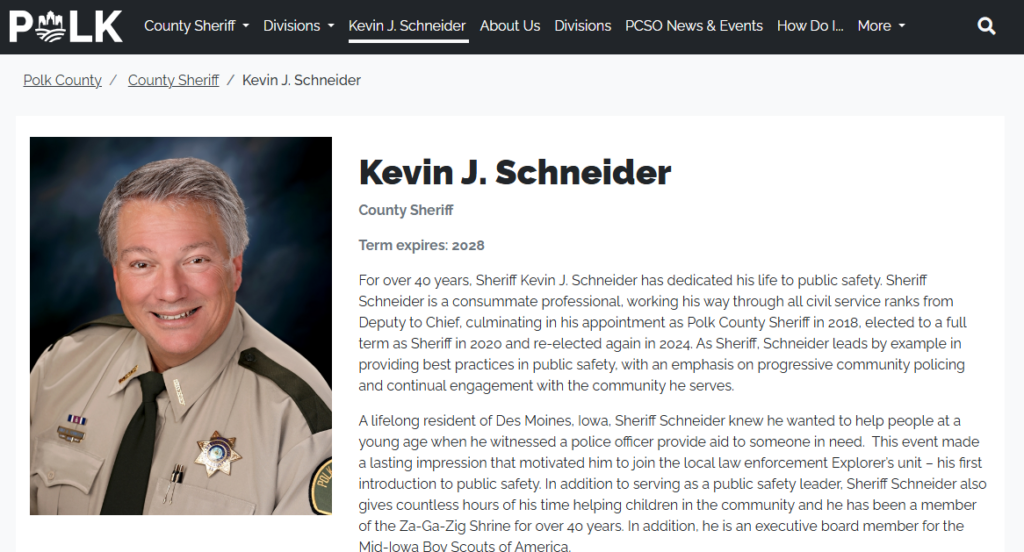
The Polk County Sheriff in Iowa leads law enforcement https://www.polkcountyiowa.gov/county-sheriff/kevin-j-schneider/ efforts across the county, focusing on public safety, accountability, and community service. The sheriff and leadership team are dedicated to maintaining transparent operations and prioritizing programs that benefit residents.
Sheriff Profile and Biography
The current sheriff of Polk County has extensive experience in law enforcement and a strong record of service. They began their career in local policing and gradually took on leadership roles, gaining expertise in investigations, emergency response, and public safety strategies. Their background emphasizes community-oriented policing and professional standards.
Leadership Priorities and Programs
The sheriff leadership team emphasizes proactive crime prevention and efficient law enforcement. Key initiatives include:
- Neighborhood safety programs to reduce crime and improve resident security.
- Training and development for deputies to ensure high professional standards.
- Technology upgrades to streamline operations and enhance response times.
These programs reflect the sheriff’s commitment to modern and effective policing.
Community Accountability Initiatives
The Polk County Sheriff’s Office encourages public engagement and transparency. Efforts include:
- Regular community meetings to share updates on policies and incidents.
- Public reporting on crime statistics and office activities.
- Feedback channels for residents to voice concerns or suggestions.
Through these initiatives, the office strengthens trust, accountability, and collaboration with the community.
By combining experienced leadership, clear priorities, and active engagement, the Polk County Sheriff’s Office in Iowa ensures safety and responsiveness while promoting openness in all operations.
Polk County Sheriff Divisions and Their Responsibilities
The Polk County Sheriff’s Office in Iowa is organized into specialized divisions to provide comprehensive public safety, law enforcement, and community support. Each division focuses on specific responsibilities, ensuring the safety, accountability, and efficient operation of the sheriff’s office.
Communications Division – Emergency & Assistance Coordination
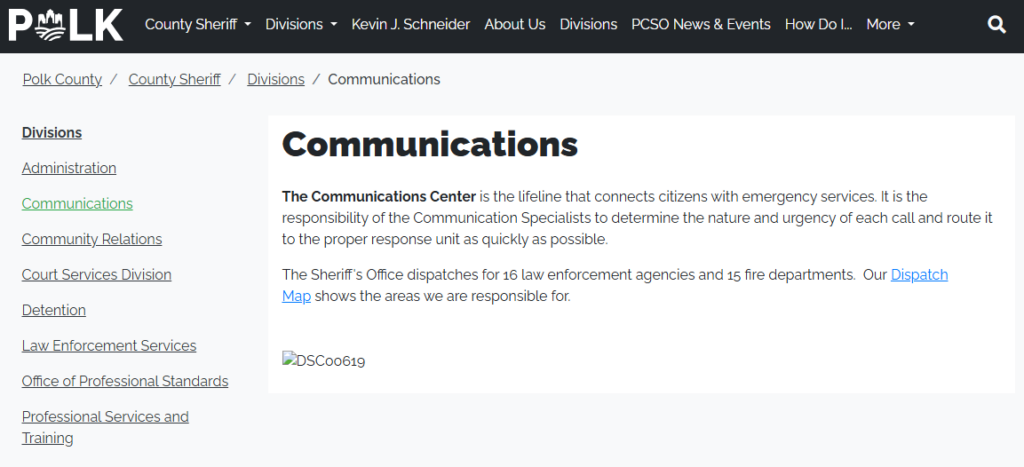
The Communications Division of the Polk County Sheriff’s Office handles emergency calls and coordinates resources to respond quickly to incidents. This division is the first point of contact for residents needing urgent help, https://www.polkcountyiowa.gov/county-sheriff/divisions/communications/ including 911 calls and non-emergency requests. Staffed by trained dispatchers, the communications division polk county sheriff ensures accurate incident reporting and efficient resource deployment. They manage dispatch operations, track patrol units, and maintain communication with law enforcement officers in the field. This team also handles incident logging, public inquiries, and coordination with other emergency services to guarantee a timely response.
Responsibilities include:
- Operating 911 services for emergencies.
- Dispatching deputies to criminal, traffic, and medical incidents.
- Maintaining detailed logs of all reported incidents.
- Providing information and guidance to the public during crises.
With a focus on fast, reliable communication, the division supports the sheriff’s office in keeping Polk County safe.
Law Enforcement Services – Patrol, Investigations, and Crime Prevention
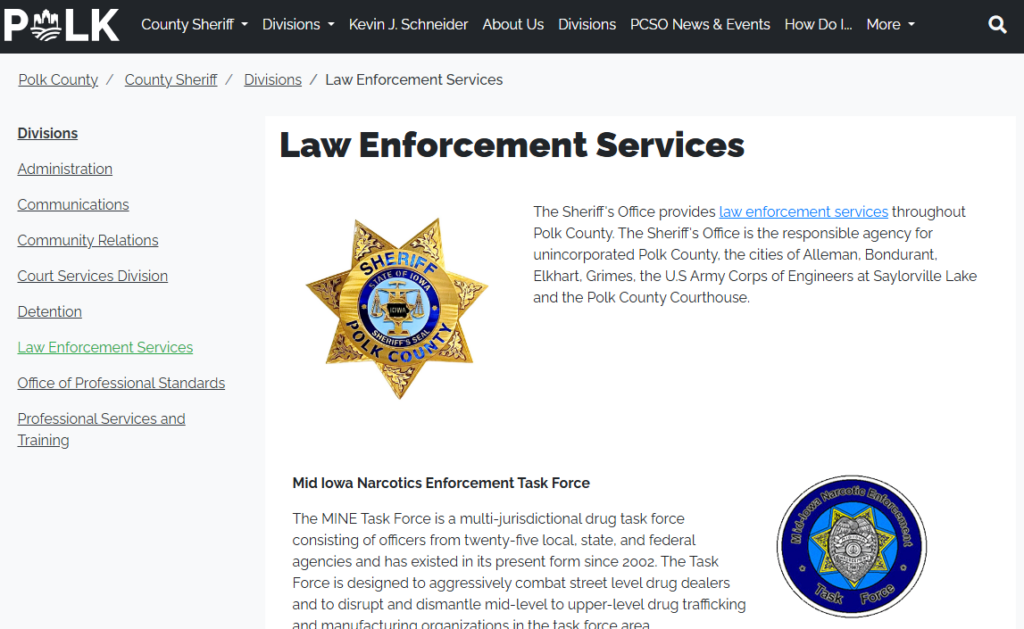
Polk County law enforcement officers provide community safety through patrols, investigations, and preventive programs. Deputies enforce laws, respond to emergencies, and work closely with residents to reduce crime https://www.polkcountyiowa.gov/county-sheriff/divisions/law-enforcement-services/. Patrol units follow designated routes to monitor neighborhoods, address disturbances, and support public events. Investigators handle complex cases, including property crimes, assaults, and fraud, gathering evidence and coordinating with prosecutors. The office also emphasizes community policing, encouraging partnerships with local organizations to prevent crime before it happens.
Duties include:
- Conducting regular patrols and traffic enforcement.
- Investigating criminal activity and preparing reports for court.
- Offering crime prevention programs to schools and neighborhoods.
- Responding to emergency calls for public safety.
This division ensures law enforcement services are proactive, visible, and responsive throughout Polk County.
Court Services – Civil Process and Security
The Sheriff Civil Process Iowa division manages legal processes and ensures courtroom safety. Officers deliver civil papers, such as summonses, subpoenas, and eviction notices, and oversee sheriff sales as required by law https://www.polkcountyiowa.gov/county-sheriff/divisions/court-services-division/. Court services staff maintain secure court environments, protecting judges, jurors, and the public. They also coordinate the transport of inmates for hearings and manage security at county courthouses.
Responsibilities include:
- Serving civil and legal documents efficiently.
- Maintaining safety and order in courtrooms.
- Assisting with sheriff sales and property seizures.
- Coordinating inmate transport for court appearances.
These services ensure that civil law enforcement and court procedures operate smoothly and safely.
Detention Division – Jail Intake, Visitation, and Inmate Services
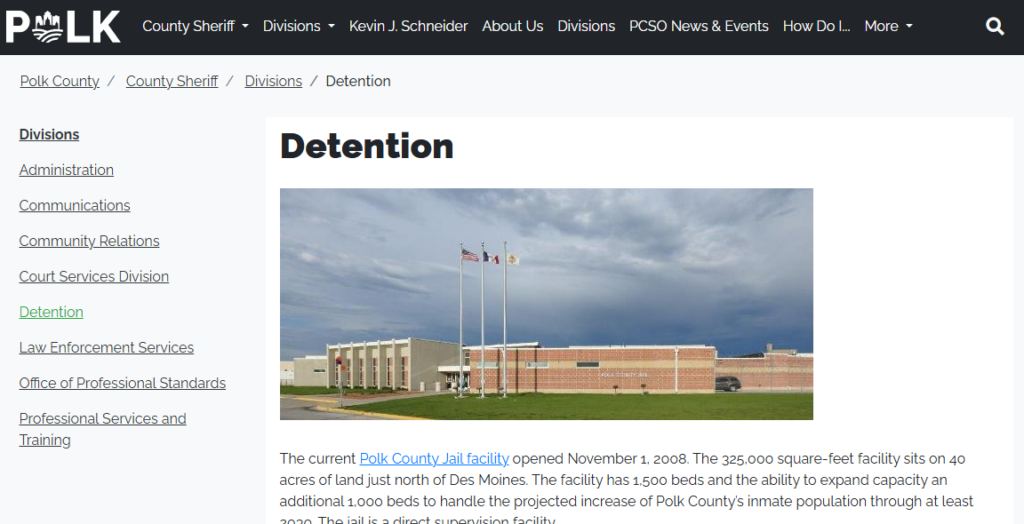
The Polk County Jail, Iowa division, oversees the county jail, managing inmate intake, housing, and daily operations. This division ensures security while providing necessary services for inmates, including medical care, meals, https://www.polkcountyiowa.gov/county-sheriff/divisions/detention/ and rehabilitation programs. Inmate services include monitoring visitation, handling inmate mail, and maintaining records of room & board and facility compliance. Staff coordinates with law enforcement and court systems to track releases, transfers, and custody status.
Core responsibilities:
- Processing new inmates and maintaining secure housing.
- Managing visitation schedules and inmate communication.
- Overseeing inmate mail, property, and basic needs.
- Ensuring compliance with jail policies and legal requirements.
The detention division balances safety, security, and humane treatment while supporting the justice system.
Office of Professional Standards – Accountability and Complaints
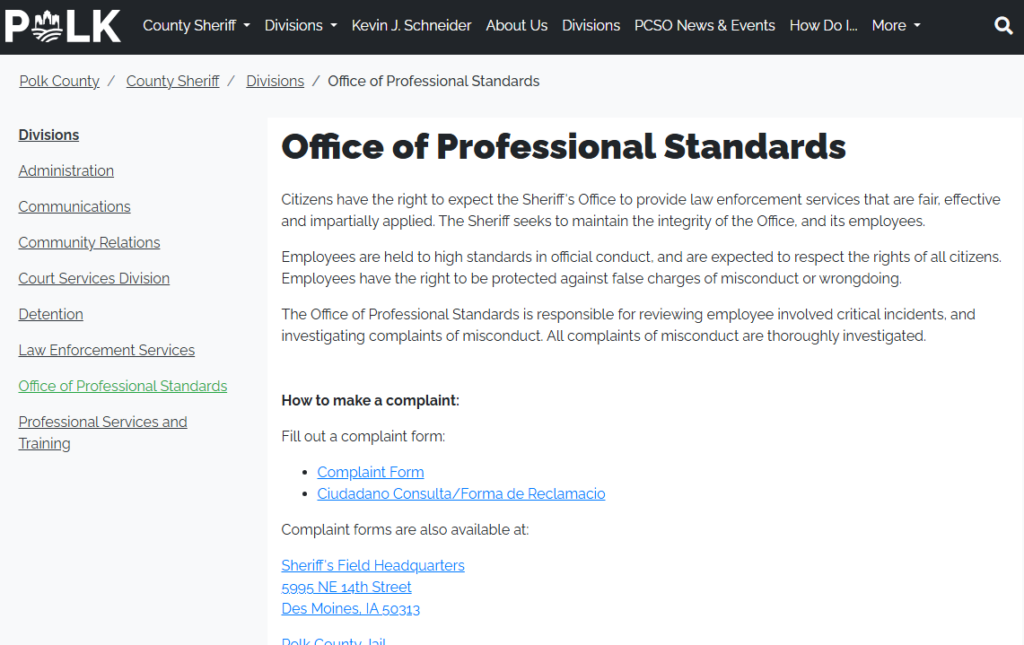
The Sheriff Complaint Process, Iowa division, https://www.polkcountyiowa.gov/county-sheriff/divisions/office-of-professional-standards/ handles public complaints and internal reviews to uphold professional conduct. This office investigates allegations of misconduct and ensures accountability for all staff members.
Responsibilities include:
- Conducting thorough internal reviews of complaints.
- Maintaining transparency and public accountability.
- Monitoring adherence to professional standards.
By addressing concerns efficiently, this office strengthens trust between the sheriff’s department and the community.
Professional Services & Training – Building Skills and Safety
The Sheriff Training Iowa division focuses on employee development, https://www.polkcountyiowa.gov/county-sheriff/divisions/professional-services-and-training/ ensuring deputies and staff stay current with law updates and tactical procedures. Training programs include defensive tactics, firearms instruction, and legal compliance.
Responsibilities include:
- Offering ongoing professional development and skill-building.
- Conducting safety drills and tactical training exercises.
- Updating staff on law changes, technology, and best practices.
This division ensures that Polk County Sheriff personnel remain capable, prepared, and knowledgeable in all aspects of law enforcement.
How to Use Sheriff Services – “How Do I” Pathways
Residents can interact with Polk County Sheriff services through simple, step-by-step processes for a variety of needs. From filing complaints to requesting public records, the office provides clear options for community members.
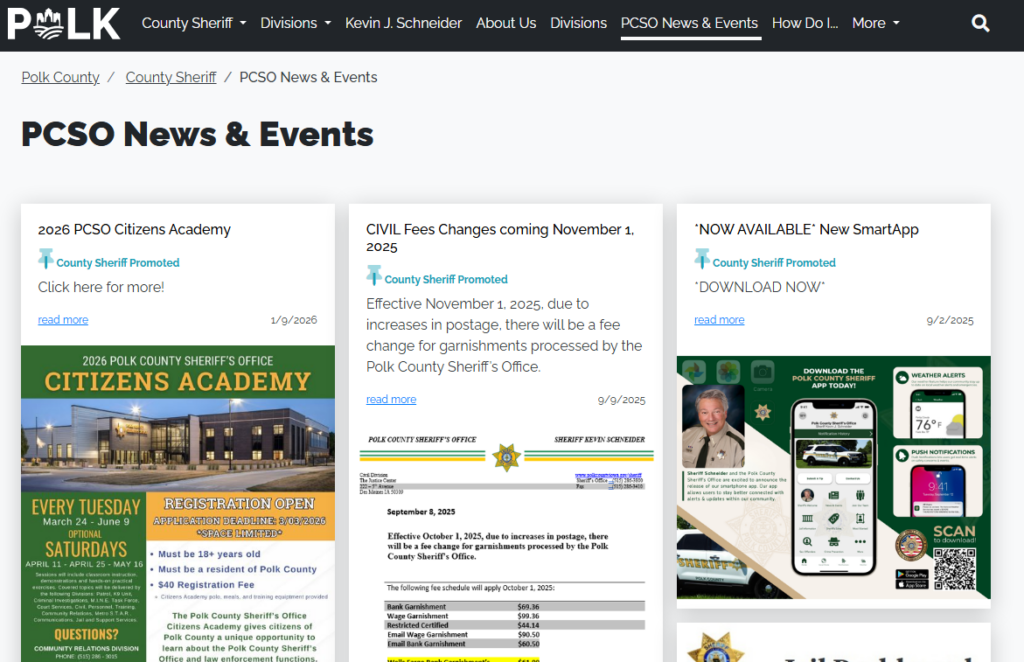
The Polk County Sheriff’s Office helps the public handle several administrative and safety-related tasks. Citizens can file complaints online or in person by providing details of the incident, including dates, times, https://www.polkcountyiowa.gov/county-sheriff/pcso-news-events/ and any supporting evidence. For information on Sheriff sales, the office posts auction dates and property listings, making it easy for users to check available items and follow sale procedures. Scheduling jail visits and sending inmate mail requires following set rules for safety and security; visitors must register and adhere to specific hours and mail.
Applying for Permits and Records
Residents can apply for weapon permits directly through the Sheriff’s office. Applications typically involve completing forms, submitting identification, and attending a brief orientation if required. Similarly, public records requests can be submitted online or via mail. These requests cover police reports, incident records, and other official documents. The office ensures a standardized process for processing and delivering these records efficiently.
Civil Forms and Volunteer Programs
The office provides access to civil forms for tasks such as serving notices or handling legal filings. Forms are available at the main office or can be downloaded from the Sheriff’s official website. Residents can also explore volunteer programs, including community patrols and support services, which help strengthen safety efforts and build local engagement.
Weapon Permit in Polk County
Residents seeking Polk County weapon permits can apply through the Sheriff’s office in Iowa. The process requires meeting specific eligibility rules, providing required documentation, and completing procedural steps.
Obtaining a sheriff’s permit in Iowa begins with confirming eligibility. Applicants must be at least 21 years old, a U.S. citizen, and a resident of Polk County. Individuals with certain criminal convictions or active restraining orders may not qualify. The Sheriff’s office reviews each application carefully to ensure compliance with state law.
Application Steps and Documentation
The application process involves several clear steps:
- Complete the application form – available online or at the Polk County Sheriff’s office.
- Provide identification – a valid driver’s license or state ID is required.
- Include proof of residency – utility bills or lease agreements help confirm local residency.
- Submit fingerprints – a background check is mandatory for all applicants.
- Pay the required fee – the amount varies depending on permit type.
Applicants may also be asked to supply references or complete a safety training course, depending on state regulations. The Sheriff’s office typically processes applications within 30–60 days, provided all documentation is accurate.
Public Records, Data, and Transparency
Polk County Sheriff maintains open public records and offers structured ways for residents, media, and researchers to request information about law enforcement activities. Its transparency efforts include official reporting tools and contact points that help people get sheriff data, reports, and records directly from the Records Management team.
The Polk County Sheriff’s Office Public Records page explains how to request reports, jail information, incident responses, and other documents under Florida public records laws. Requests are submitted with standard forms by email or in person, and records staff notify the requester once the file is ready for pickup or delivery.
What Public Records Are Available
Residents and organizations can ask for:
- Law enforcement reports (accidents, incident investigations)
- Jail records and booking details
- Found animal reports and log events
- Scam and safety alerts
- Records request status updates
This is all part of the sheriff’s commitment to transparency and reporting so that community members can see how public safety is carried out.
Sheriff Data Dashboards & Reporting Tools
The Sheriff’s Office links to various reporting tools, though not always full graphical dashboards like crime maps or interactive trend viewers. Users can:
- Submit a public records request via the official form on the sheriff’s site
- Sign up for newsletters that include budget summaries and updates
- Follow social feeds for recent arrests, notices, and community alerts
Officials place links to budgets and forms in the Citizen Information section, making fiscal data and records easy to consult.
How to Request Records
To file a Polk County Sheriff public records request:
- Download the records form from the sheriff’s official site.
- Email it to recordsrequest@polksheriff.org or deliver it in person.
- Pay any applicable fees if the total cost of copying and staff time exceeds the base threshold.
Records staff generally acknowledge requests quickly and provide estimated completion dates.
By offering clear submission steps, periodic summaries, and multiple reporting links, the Sheriff strives for a transparent public records process, helping people access official sheriff data without confusion. gbc
Community Relations and Public Outreach
The Polk County Sheriff’s Office actively engages with the community to build trust and promote safety. Through various programs, events, and partnerships, the department works to strengthen connections between law enforcement and residents.
The sheriff’s office operates several community-focused initiatives that support public safety and neighborhood engagement. Programs like neighborhood watch coordination, school safety presentations, and youth mentoring help residents stay informed and involved. Officers frequently attend local events, fairs, and community meetings to answer questions, share crime prevention tips, and encourage open communication. These efforts create a positive presence and make law enforcement more approachable.
Outreach Programs and Neighborhood Support
The department runs educational sessions and crime prevention workshops in collaboration with local schools and civic organizations. Highlights include:
- School Safety Programs: Officers provide guidance on internet safety, bullying prevention, and emergency preparedness.
- Neighborhood Programs: Partnerships with residents help reduce property crimes and foster safer streets.
- Youth Engagement: Mentoring and recreational initiatives give young people opportunities to connect with deputies in supportive ways.
These programs encourage residents to play an active role in maintaining community safety while promoting understanding of law enforcement practices.
Public Events and Partnerships
The Polk County Sheriff actively organizes outreach events to strengthen public relationships. Examples include:
- Open houses at the sheriff’s office
- Participation in local festivals and civic gatherings
- Collaboration with nonprofit organizations for safety campaigns
By participating in these events, deputies demonstrate commitment to the community and provide accessible resources for crime prevention. Strong partnerships with schools, neighborhood associations, and local businesses enhance the effectiveness of these initiatives, creating a network of safety and engagement.
Administration – Budget, Strategy, and Technology
The Polk County Sheriff’s administration oversees all operational, financial, and technological decisions that affect public safety. Effective administration ensures resources are allocated efficiently, supporting officers and improving community protection.
The administration team manages the sheriff’s budget, tracking expenditures and prioritizing funds for staffing, equipment, and community programs. By applying detailed budgeting practices, the department secures grants and other funding sources that expand law enforcement capabilities without overburdening taxpayers. For example, federal and state grants help fund technology upgrades, specialized units, and training initiatives that improve response times and investigative accuracy. Technology plays a key role in administration. The department invests in analytics software, communication systems, and digital records management, which allow deputies to track crime patterns and allocate resources effectively. These tools enhance decision-making, reduce delays, and make daily operations more efficient.
Areas of focus include:
- Budgeting: Allocating funds for personnel, facilities, and community programs.
- Grants: Securing external funding for technology projects and training.
- Technology projects: Implementing digital systems, crime analytics, and mobile tools.
- Strategic planning: Forecasting future needs and aligning resources with public safety goals.
By combining careful financial planning with strategic technology use, the Polk County Sheriff’s administration strengthens operational efficiency. This ensures officers have the tools and support they need to respond quickly, manage incidents, and maintain safer neighborhoods throughout Polk County.
Polk County Sheriff: Official Contacts and Departments
The Polk County Sheriff’s Office provides a range of law enforcement services, detention management, and court support throughout the county. Residents can reach the office directly for inquiries, reporting, or assistance through its official contacts.
The Sheriff’s Office is divided into several departments, each handling specific responsibilities. Law enforcement services include patrol, investigations, and community safety programs. Detention services manage the Polk County Jail, inmate custody, and facility operations. Communications oversees emergency 911 dispatch, non-emergency calls, and public alerts. Meanwhile, court services handle civil processes, serve legal papers, and provide courtroom security. Knowing the right contact for each department helps residents get faster support and ensures proper handling of requests.
Below is a structured table with key divisions, phone numbers, and addresses for Polk County Sheriff contacts:
| Division / Department | Phone Number | Address | Services Provided |
|---|---|---|---|
| Administration | (515) 286-2115 | 1985 NE 51st Pl, Des Moines, IA 50313 | General inquiries, employment, and administrative support |
| Law Enforcement Services | (515) 286-2120 | 1985 NE 51st Pl, Des Moines, IA 50313 | Patrol, investigations, public safety, crime prevention |
| Detention / Jail | (515) 286-3200 | 2225 E 17th St, Des Moines, IA 50316 | Inmate custody, booking, facility management |
| Communications / Dispatch | (515) 286-3344 | 1985 NE 51st Pl, Des Moines, IA 50313 | Emergency 911, non-emergency calls, public alerts |
| Court Services | (515) 286-3245 | 500 Mulberry St, Des Moines, IA 50309 | Civil papers, courtroom security, court-related services |
Residents are encouraged to contact the appropriate division directly to save time. Each department operates during regular business hours, though emergency dispatch is available 24/7.
Polk County Sheriff: Frequently Asked Questions (FAQs)
The Polk County Sheriff’s Office in Iowa provides law enforcement, jail management, and civil services for residents. People often ask about filing complaints, visiting inmates, sending mail, accessing public records, and volunteer programs. This FAQ section answers those common concerns in one clear paragraph per topic.
How to File a Complaint?
Residents can file complaints against deputies or staff by submitting a written and signed statement with dates, times, and details. Complaints can be sent via mail, phone, or in person at the Sheriff’s administrative office. Each complaint is reviewed promptly to ensure accountability and proper action. Clear documentation helps the office investigate efficiently. This process promotes transparency while protecting both citizens and staff.
Contacting Different Divisions?
The Sheriff’s Office has divisions like Administration, Civil, Communications, and Law Enforcement, each handling specific services. Residents can call the main lobby at (515) 286-3400 for guidance on the correct division. Administration manages policies, Civil handles court documents, Communications covers emergency dispatch, and Law Enforcement manages patrols and investigations. Contacting the right division speeds up responses and resolves issues faster.
Jail Visitation and Sending Mail?
Inmate visitation requires scheduling and following safety rules, including presenting a valid ID and adhering to the dress code. Inmates can receive letters and approved items, but packages or cash need prior approval. Personal property is limited, and staff control access for safety. Following these rules ensures visits run smoothly and maintains order in the facility. Families and friends should plan to avoid delays.
Accessing Public Records?
The Sheriff’s Office provides public records such as incident reports, arrest logs, and civil filings. Requests must include the record type, date, and involved parties. Residents can submit requests online, in writing, or in person at the Civil Division. Some records may have fees or privacy restrictions. Properly submitted requests help residents obtain documents efficiently while respecting legal boundaries.
Participating in Volunteer Programs?
Volunteer opportunities support community safety programs and office operations. Residents may help with traffic safety, educational initiatives, or administrative tasks. Interested volunteers must complete an application and background check through the Administration Division. These programs strengthen community relationships and provide hands-on law enforcement support. Participation also gives residents a chance to contribute to local safety efforts.