The Polk County Auditor in Iowa manages the county’s finances, oversees audits, and administers elections with transparency and accuracy. This office monitors the county budget, tracks expenditures, and ensures all departments comply with state laws. Residents depend on the auditor for financial oversight, public reporting, and fair election management, making it a cornerstone of local governance. By maintaining detailed records and performing regular audits, the auditor protects public funds and reinforces trust in county operations.
Beyond financial supervision, the auditor’s office handles voter registration, election preparation, and ballot certification, ensuring every citizen’s vote counts. It also provides accessible information on property taxes, revenue streams, and departmental spending, helping residents stay informed about county operations. Through careful monitoring of county finances and transparent reporting, the auditor supports responsible decision-making and accountability across all county services. Residents can use these resources to review budgets, track audits, and verify election results efficiently.
What are the Polk County Auditors?
The Polk County Auditor manages elections, property tax duties, official board records, and county budget tracking. The auditor of Polk County Iowa, plays a key role in maintaining transparent government operations and reliable public service across the county. The office maintains financial records, supervises election processes, and keeps official documentation for county leadership. These responsibilities help residents review real estate records, verify tax details, and stay informed about county decisions. Accurate records and organized administration support accountable government and stable county operations.
Elections Administration and Voter Services
The Polk County Auditor supervises elections for local, state, and federal offices across the county. The office manages voter registration, prepares ballots, and organizes polling locations to support secure voting procedures. Election staff verify voter data, process absentee ballots, and publish certified results after each election. Clear election procedures help maintain transparency and protect the integrity of the voting system. Residents rely on the auditor’s office for election schedules, voter record updates, and official election reporting.
Property Tax Administration and Real Estate Records
Property tax administration forms a major responsibility of the county auditor. The office calculates tax amounts using property assessment data and approved local tax rates. Staff maintains detailed real estate records, https://www.polkcountyiowa.gov/county-auditor/ including parcel information, ownership details, and tax classifications for properties across Polk County. These records allow residents to confirm property details, review tax obligations, and track land ownership history. Accurate parcel data supports both government planning and reliable property tax management.

County Board Records and Official Documentation
The Polk County Auditor maintains official records for the Polk County Board of Supervisors, including meeting minutes, agendas, and county resolutions. These documents record policy decisions and administrative actions that affect county operations. Public documentation supports transparency by keeping a permanent record of board discussions and decisions. Residents, journalists, and researchers often review these records to follow local government activities. Organized board records help maintain clear communication between county leadership and the public.
Budget Oversight and County Financial Management
Budget supervision remains another major responsibility of the Polk County Auditor. The office tracks county revenue, monitors departmental spending, and maintains official financial records throughout the fiscal year. Accurate reporting helps county leadership review financial performance and maintain responsible spending practices. Budget documentation provides transparency for residents who want to review public fund usage. Strong financial oversight supports stable county operations and effective public service delivery.
Elections & Voter Registration
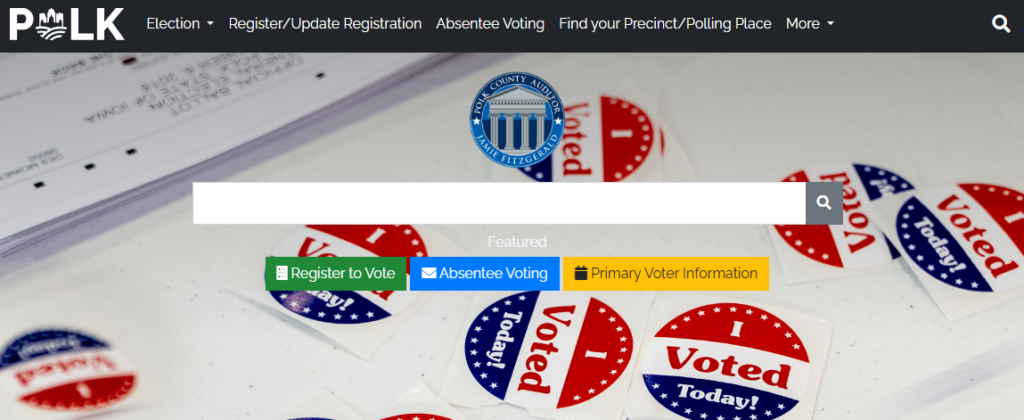
Residents of Polk County manage voter registration, absentee ballots, and polling locations through the Polk County Auditor. The office maintains accurate voter rolls, precinct assignments, and election staffing so every eligible voter can participate in local, state, and federal elections. Election services include voter registration updates, absentee voting, polling place lookup, https://www.polkcountyiowa.gov/county-auditor/election/, and precinct election official recruitment. Many tools connect with records maintained by the Iowa Secretary of State, which maintains the statewide voter database and election calendar.
How to Register to Vote: Steps
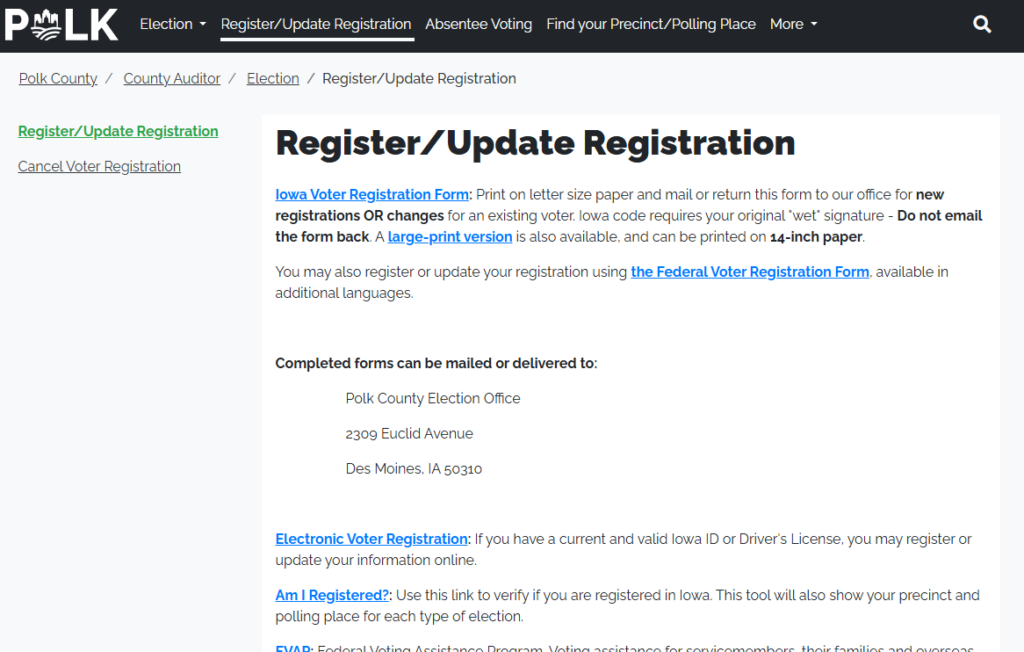
Voter registration in Polk County allows eligible residents to participate in upcoming elections. The process records a voter’s legal name, address, and precinct assignment so poll books reflect accurate information on Election Day https://www.polkcountyiowa.gov/county-auditor/election/registerupdate-registration/. Residents can complete voter registration in Polk County through several official methods. Registration must match the voter’s legal name and current residential address to place the voter in the correct precinct.
Steps in the voter registration process:
- Check eligibility
- Must be a U.S. citizen
- Must be at least 18 by Election Day
- Must live in the assigned Polk County precinct
- Submit a registration form
- Online through the Iowa voter portal
- Mail-in form sent to the Polk County Auditor
- In-person registration at the auditor’s office
- Update existing voter records
- Change address after moving within Polk County
- Correct spelling of a legal name
- Update party affiliation if desired
- Verification in the poll book
Election workers check the voter’s record in the precinct poll book before issuing a ballot.
Same-day registration remains available at polling places during many elections. Voters must present identification and proof of residence if their record requires verification.
Absentee Voting Procedures & Deadlines
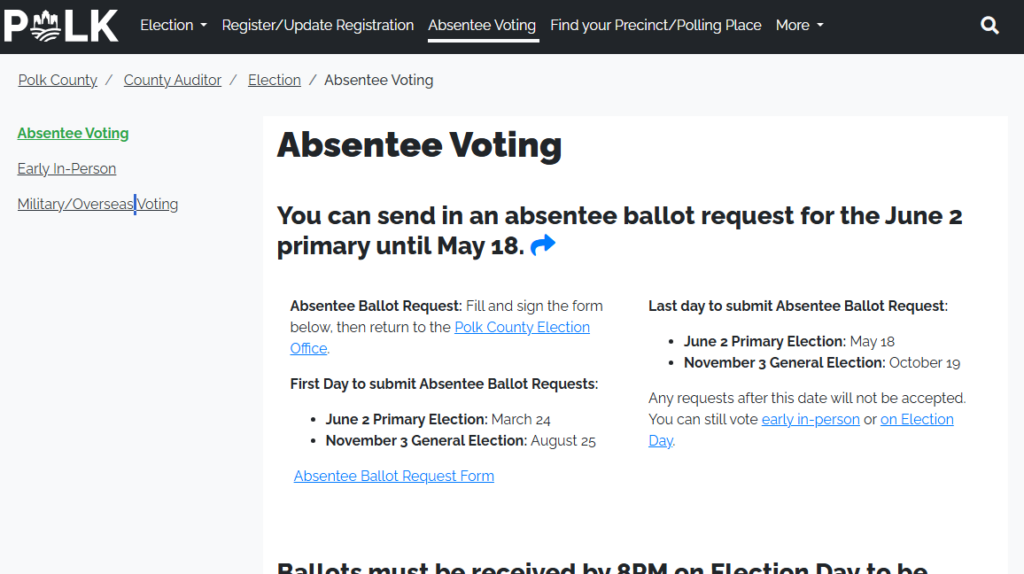
Absentee voting in Polk County allows voters to submit ballots without visiting a polling location. Mail-in voting works for voters who travel, work long hours, or qualify for absentee eligibility under Iowa law https://www.polkcountyiowa.gov/county-auditor/election/absentee-voting/. The absentee process begins when a voter submits a request form to the Polk County Auditor. The office reviews the request and sends an official absentee ballot packet with voting instructions.
Typical absentee voting steps:
- Submit an absentee ballot request form
- Receive the ballot and official instructions by mail
- Mark selections privately
- Seal the ballot in the provided return envelope
- Sign the voter declaration
- Submit the ballot before the election deadline
Important details include:
| Absentee Voting Step | Key Detail |
|---|---|
| Ballot Request | Submitted to the county auditor before the request deadline |
| Mail-in Voting | Ballot mailed directly to the voter’s registered address |
| Ballot Submission | Must arrive by the deadline listed on the election calendar |
| Election Dates | Posted by the Iowa Secretary of State for every election |
Early in-person absentee voting often opens several weeks before election day at the county auditor’s office. Voters who miss the mail deadline can vote early in person using the same ballot system.
Find Your Polling Place
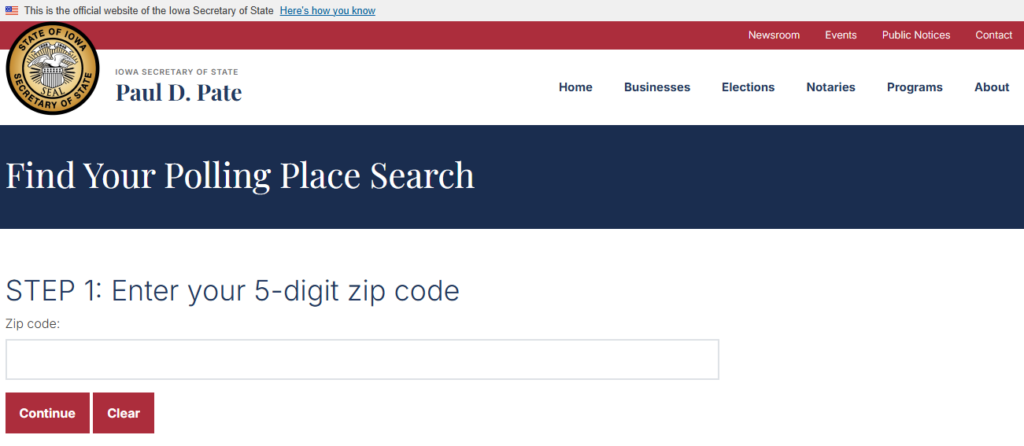
A voter’s polling location depends on the assigned precinct assignment within Polk County. Each precinct receives a verified polling site where voters check in and cast ballots on Election Day. Residents can perform a polling place lookup in Polk County through official state tools. The lookup confirms the voter’s precinct, polling address, and voting hours.
Typical polling place lookup results include:
- Precinct name and number
- Verified voting location
- Polling hours on election day
- Sample ballot for that precinct
The statewide voter search tool provided by the Iowa Secretary of State pulls data from county election records. Voters who recently moved should update their registration so the correct polling location appears.
Serve as a Precinct Election Official
Precinct election officials support election operations inside polling locations. The Polk County Auditor recruits residents to help check voters, issue ballots, and maintain accurate poll books https://apps.sos.iowa.gov/elections/voterreg/pollingplace/search.aspx. This role counts as a paid civic duty during election periods. Workers assist voters, verify precinct assignments, and help maintain accessible polling stations.
Typical responsibilities include:
- Checking voter identification in the poll book
- Issuing ballots and explaining voting equipment
- Assisting voters with accessibility needs
- Maintaining secure ballot handling procedures
Election officials attend a short training session before the election. Many counties recruit bilingual officials so voters can receive language support when needed.
Property Tax Administration
The Polk County Auditor’s Office manages several steps in the property tax system for Polk County, https://www.polkcountyiowa.gov/county-auditor/property-tax/ Iowa. It calculates taxes, records parcel data, and prepares official tax rolls used by local governments.
The office works with cities, school districts, and other taxing authorities that submit certified tax levies each year. The Auditor applies these rates, records real estate data, and maintains parcel history so the county tax system stays accurate and consistent.
How Property Taxes Are Calculated
Property tax in Polk County, Iowa, is calculated through a process managed by the Polk County Auditor’s Office. The office prepares the auditor tax roll using assessed values from the county assessor and tax levy rates certified by local governments such as cities, school districts, and community colleges. State rollbacks then adjust taxable value for certain property classes, including residential and agricultural land, which limits large increases in tax amounts. After applying levy certification, budget allocation from taxing authorities, and rollback percentages, the Auditor finalizes the property tax record for each parcel before sending the completed tax roll to the county treasurer for billing and collection.
Reading Your Real Estate Records
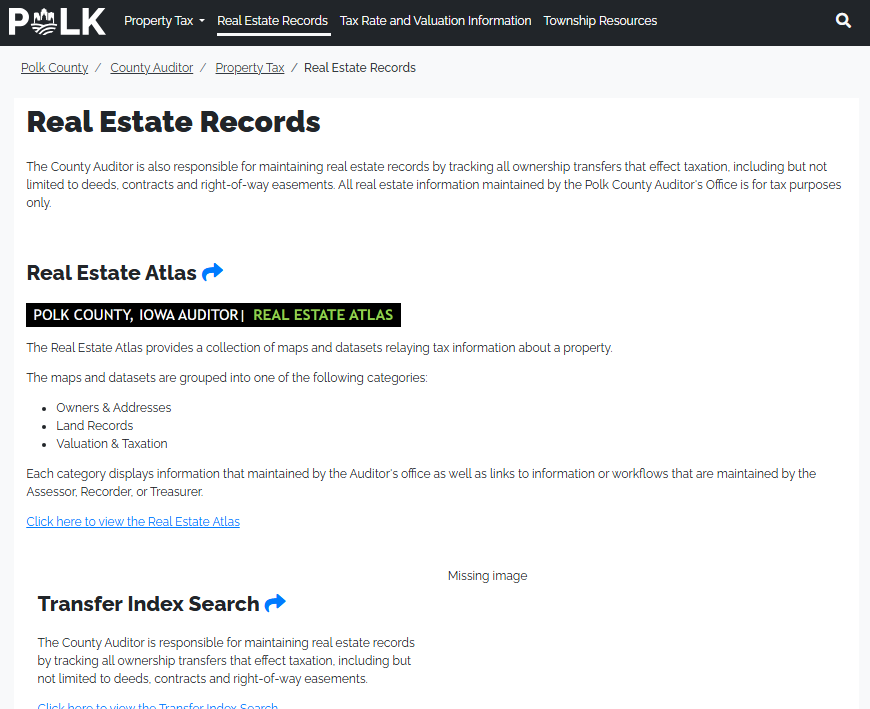
The Polk County Auditor’s Office maintains official real estate records for Polk County that describe each taxable parcel. These records show ownership details, property classification, and tax-related information tied to land parcels https://www.polkcountyiowa.gov/county-auditor/property-tax/real-estate-records/. Every parcel receives a unique identification number. This number connects property values, ownership history, and tax categories in county records.
Details found in real estate records include:
| Record Element | What It Shows |
|---|---|
| Ownership | Current property owner listed in county records |
| Tax Parcel Number | Unique ID used for tax tracking |
| Land Records | Legal description and lot details |
| Valuation Data | Assessed and taxable values |
| Tax Categories | Residential, commercial, agricultural, or exempt |
Use the Real Estate Atlas
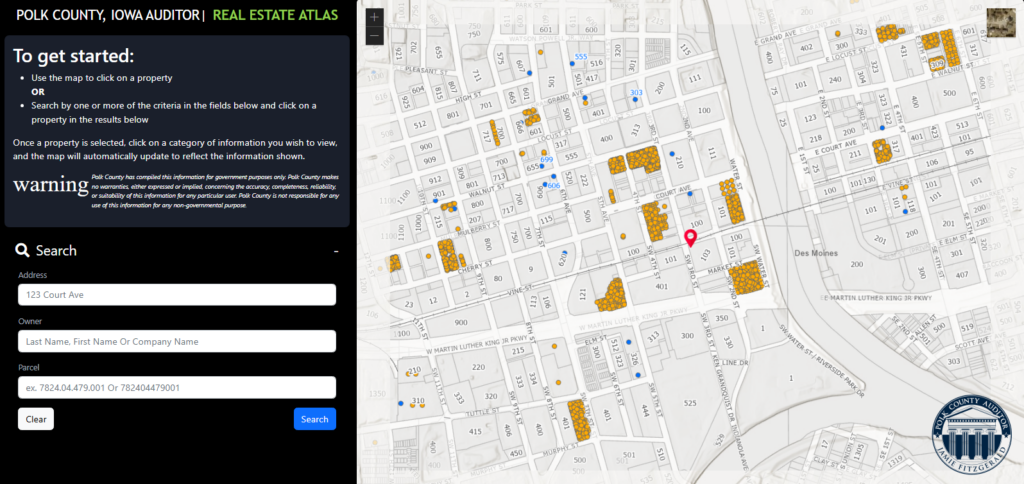
The Real Estate Atlas provides a visual mapping system for property parcels in Polk County, Iowa. This digital mapping tool shows parcel boundaries, ownership references, and legal land descriptions in map form https://atlas.polkcountyiowa.gov/. The atlas helps residents and professionals locate property information through parcel maps layered with geographic data. Users can search by address, parcel number, or legal land reference.
Common features available in the atlas include:
- Parcel visualization showing property boundaries
- Layered mapping tools with zoning and district overlays
- Legal land references tied to township and section numbers
- Ownership labels connected to tax parcel records
These mapping layers allow users to see how parcels fit within neighborhoods, school districts, and taxing authorities.
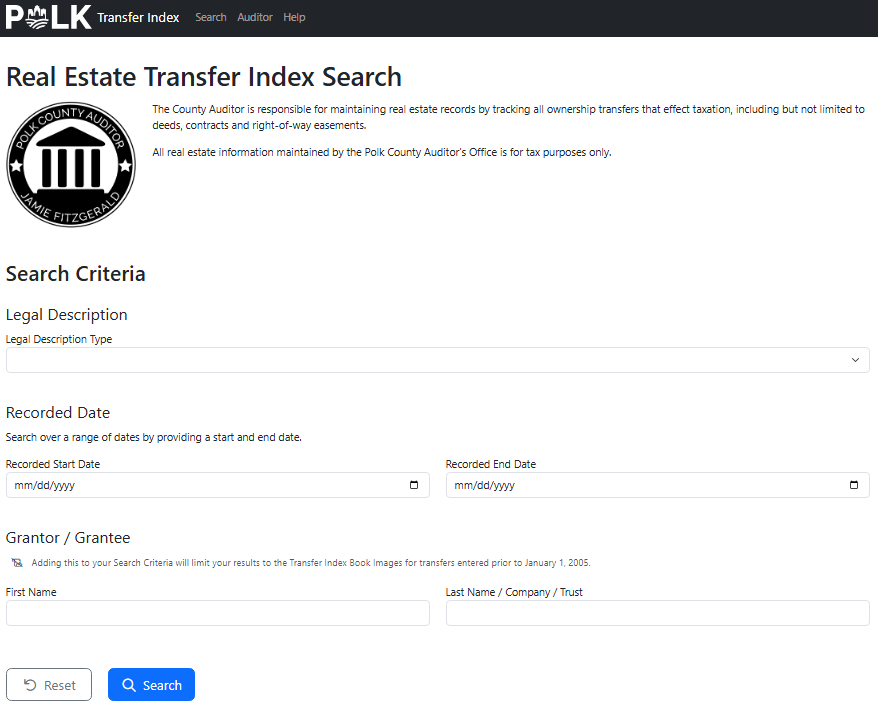
Track Ownership Changes: Transfer Index Search
The Transfer Index Search tracks ownership transfer records in Polk County and records the history of parcel ownership over time. When a property deed is recorded with the county recorder, the Polk County Auditor’s Office updates https://transferindexsearch.polkcountyiowa.gov/ the parcel record to reflect the new owner and links the change to the tax parcel history in Polk County, Iowa. The index typically lists previous and current owners, deed recording dates, and parcel identification numbers. This ownership history helps maintain accurate public records and confirms which property owner receives future property tax statements after a recorded deed transfer.
Central Accounting & Board Records
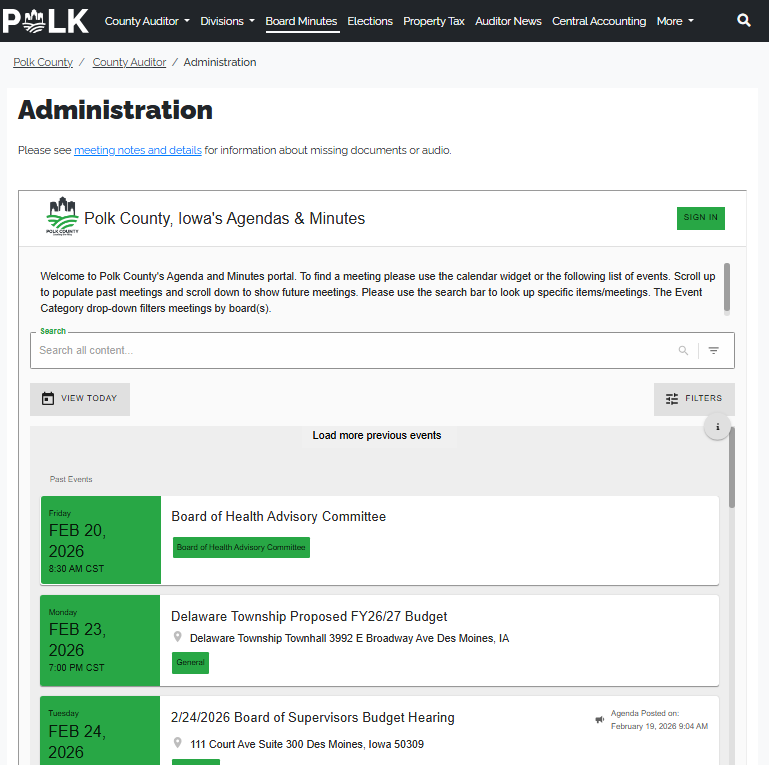
The Polk County Auditor manages county financial records and maintains official board documentation. This office tracks county finances, preserves board records in Polk County, and keeps public meeting information available for review https://www.polkcountyiowa.gov/county-auditor/administration/. County government operations rely on organized accounting and open records. The Auditor maintains budget files, levy certifications, and meeting minutes, allowing residents to see how public funds are allocated and reviewed.
Budget Management and County Financial Oversight
The Polk County Auditor manages the central accounting system used by county departments. This system records revenue sources, departmental spending, and budget allocations in one official financial ledger. Each year, the office gathers financial data from departments and prepares reports that assist with county budgeting and financial planning.
Accounting duties include:
- Tracking departmental budgets and expenditures
- Recording revenue from property taxes, grants, and service fees
- Maintaining official financial ledgers
- Preparing reports used for budget audits
- Documenting allocations for public services
These records help maintain financial transparency across county operations. Budget data shows how funds support roads, public safety, elections, and other county programs. Public financial records remain part of the county archive, allowing residents and property owners to review how county finances are managed.
Board Records, Levy Tracking, and Meeting Transparency
The Auditor’s office maintains official documentation for the Polk County Board of Supervisors, including agendas, resolutions, ordinances, and financial approvals. During meetings, the Auditor records meeting minutes, which summarize discussions, votes, and approved actions, creating a permanent legal record of board activity.
Records preserved by the office include:
| Record Type | Purpose |
|---|---|
| Meeting Minutes | Summary of board discussions and decisions |
| Resolutions & Ordinances | Official legal actions approved by the board |
| Budget Reports | Annual summaries of county finances |
| Levy Certifications | Approved property tax levy records |
| Financial Statements | Reports showing county revenue and spending |
The Auditor tracks property tax levies approved by the Board of Supervisors and records them in the county’s financial system. These levy certifications help determine how property taxes fund local services during each fiscal year and connect directly with budget allocations and property tax administration. Accurate documentation of county finances, board records in Polk County, and budget audits supports public oversight and maintains transparency in local government operations.
Township Clerks & Statutory Duties
Township clerks in Polk County prepare local budgets and certify property tax levies that fund township services. The Polk County Auditor reviews those filings, verifies levy certification, and records them in the county’s official tax system.
Townships rely on the county auditor to keep budgets, levies, and records accurate. Clerks prepare annual budget documents, meeting minutes, and levy certifications under Iowa statutory duties for local government finance. The auditor’s office checks each filing, confirms levy limits, and enters approved values into the county tax database. Clear records help maintain record integrity for township finances and property tax distribution.
How Township Budgets & Levies Connect to the Auditor
Township officials submit financial documents to the county auditor during each budget cycle. The auditor’s staff reviews levy certification forms, confirms totals, and records approved figures before the county tax rate calculation begins.
Steps in the process include:
- Township clerks prepare budgets for services such as cemeteries, fire protection, and township administration
- Levy certification submission to the county auditor by the statutory deadline
- Auditor review of levy limits set under Iowa tax law
- Entry of approved levies into the county property tax system
Each step supports accurate tax calculations across all taxing districts.
Local Budget Support for Township Clerks
The auditor’s office provides local budget support and procedural information for township officials. This support helps clerks file correct levy documents and maintain clear financial records.
Typical resources include:
| Resource | Purpose |
|---|---|
| Budget forms | Standard templates for township spending plans |
| Levy certification documents | Required forms for tax rate approval |
| Filing deadlines | Calendar for annual submissions |
| Record standards | Practices that protect township financial records |
Accurate levy filings help township governments receive the funding approved in their budgets. The auditor’s review process keeps township tax records organized and aligned with county tax administration.
Interlocking Roles: Assessor, Recorder, Treasurer, Auditor
The Polk County Auditor, Assessor, Recorder, and Treasurer work as a connected system that manages property data and tax collection. Each office handles a different step, yet they rely on shared records to keep the property tax roll accurate.
Property taxes rely on coordination across these four county offices. Each department handles a specific task, from recording deeds to calculating taxes. Clear data flow between offices keeps assessed values, property records, and tax bills consistent across Polk County.
How the Offices Work Together
Every property tax cycle begins with property information and ends with tax collection. Each office plays a role in this process.
| Office | Primary Role | Key Records Managed |
|---|---|---|
| Assessor | Determines property value | Assessed values, property characteristics |
| Recorder | Maintains official ownership documents | Deeds, mortgages, property records |
| Auditor | Calculates tax roll and certifies levies | Tax roll, levy certification, budgets |
| Treasurer | Bills and collects property taxes | Tax payments, delinquent taxes |
The Assessor’s Office evaluates property characteristics and market activity. Staff calculates assessed values for homes, land, and commercial buildings. These values form the starting point for tax calculations.
Planning – Election & Property Deadlines
Polk County residents benefit from tracking election and property tax timelines set by the Polk County Auditor. Key dates for voter registration deadlines and property tax deadlines help residents vote on time and keep property accounts current.
Staying aware of these timelines helps residents avoid late filings and missed opportunities. The Polk County Auditor’s Office maintains official calendars that include election schedules, tax payment dates, levy submission periods, and absentee voting timelines. Most updates appear on official portals maintained by the county and the State of Iowa.
Election Timeline and Voter Registration Deadlines
Election deadlines in Polk County follow rules established by the State of Iowa. Residents must complete voter registration before the cutoff date to appear in the poll book at their precinct.
Election deadlines typically include:
| Election Task | Typical Deadline |
|---|---|
| Voter registration update | About 15 days before Election Day |
| Absentee ballot request | Around 15 days before Election Day |
| Early voting period | Begins roughly 20 days before Election Day |
| Election Day voting | Polls open on the official election date |
Residents who miss the advance deadline may still register at the polling place on Election Day by presenting valid identification and proof of residence.
The Auditor’s election calendar also lists:
- Absentee requests submission periods
- Polling place assignments by precinct
- Ballot information and sample ballots
- Election worker opportunities
These details appear on official portals and county election pages.
Property Tax Deadlines and Budget Timelines
Property owners in Polk County follow a set schedule for property tax payments and local budget planning. The Polk County Auditor supports tax administration by verifying levy certification, preparing the auditor’s tax roll, and coordinating with taxing authorities.
Standard property tax deadlines include:
- September 30: First installment due
- March 31: Second installment due
- Budget planning season: Winter through early spring
- Levy submission: Local taxing authorities submit proposed rates before budget approval
During the budget process, cities, schools, and districts submit proposed levy rates. The Auditor reviews these figures and prepares the official tax roll used to calculate property bills.
Accessibility, Public Records & Getting Help
Polk County residents can access public records and auditor services through multiple channels, including in-person visits, phone, or online requests. The Auditor’s office ensures staff assistance and accessibility features to make document retrieval simple and efficient.
The Polk County Auditor provides clear pathways for residents to obtain public records. Individuals can submit a public records request via the office website, by email, or directly at the main office located at 123 E. Grand Avenue, Des Moines, IA 50309. The office supports accessibility with wheelchair ramps, elevators, and assistive devices for those with visual or hearing challenges. Staff members are available to help residents locate documents, explain processes, and answer questions regarding property, election, or financial records.
Contact Information for Polk County Auditor:
- Phone: (515) 286-3080
- Email: auditor@polkcountyiowa.gov
- Office Hours: Monday–Friday, 8:00 a.m.–4:30 p.m.
- Office Locations: Main office in Des Moines and satellite offices for public convenience
Residents requesting records should provide detailed information about the documents needed. Common requests include property assessments, tax rolls, and official meeting minutes. Response times typically range from a few days to two weeks, depending on the type and volume of records. Using online request forms or direct phone contact often speeds up document retrieval.
Official Auditor Office Locations & Phone Numbers
Polk County residents can reach the Auditor’s main office or the Election Office directly for inquiries and services. Both offices provide clear contact details and convenient hours to assist the public efficiently. The Polk County Auditor’s Office is located at 111 Court Avenue, Des Moines, IA 50309. This office handles property assessments, tax information, and general county auditing services. Residents can call (515) 286-3080 for questions regarding official documents, records, or auditing services. Office hours are typically Monday through Friday, 8:00 a.m. to 4:30 p.m.
For election-related matters, the Polk County Election Office is situated at 1200 Carpenter Avenue, Des Moines, IA 50314. This office manages voter registration, absentee ballots, and election results. Residents can reach the office at (515) 286-3247. The Election Office follows standard weekday hours and often extends hours closer to election dates.
Reference Table for Polk County Auditor Contacts:
| Office | Address | Phone Number | Service Hours |
|---|---|---|---|
| Auditor Main Office | 111 Court Avenue, Des Moines, IA 50309 | (515) 286-3080 | Mon–Fri, 8:00 a.m.–4:30 p.m. |
| Election Office | 1200 Carpenter Avenue, Des Moines, IA 50314 | (515) 286-3247 | Mon–Fri, 8:00 a.m.–4:30 p.m. (extended during elections) |
Residents can call or visit either office for Polk County Auditor Office services, property tax inquiries, voter registration questions, or document requests. Using the correct office and phone number ensures faster assistance and accurate information.
Polk County Auditor FAQs
The Polk County Auditor provides answers to common questions about property taxes, elections, and public records. Residents can find clear guidance here to handle their civic and financial responsibilities efficiently.
What services does the Polk County Auditor provide?
The Auditor’s office manages elections, voter registration, property tax collection, and public records. It oversees absentee voting, tracks levies, and maintains board minutes. Residents can also use the office for parcel lookup and verification of property ownership. This makes it easier for homeowners and taxpayers to handle tasks without multiple office visits.
How can I register to vote in Polk County?
Residents can register to vote online, by mail, or in person at the Auditor’s office. Registration deadlines are usually 20 days before an election, but checking the official Polk County voter portal ensures the most accurate dates. The office also helps with updating voter information after moves or name changes.
Can I request an absentee ballot?
Yes, eligible voters can request an absentee ballot through the Auditor’s office. Applications are accepted via online forms, mail, or in person, and ballots must be returned by election day. Early requests are encouraged to allow time for processing and mailing.
How are property taxes calculated?
Property taxes in Polk County are based on assessed property value and applicable levies. The Auditor maintains records of assessments, property exemptions, and local tax rates. Residents can use the parcel lookup tool to view property details, assess values, and confirm tax amounts before payment.
What are the deadlines for property tax payments?
Property tax deadlines typically fall twice a year, with due dates in March and September. Late payments may incur penalties and interest. The Auditor’s office posts a full calendar of deadlines online and provides reminders for registered property owners.
How do I access public records?
Residents can request official documents like board minutes, budgets, and tax records from the Auditor’s office. Requests can be submitted in person, by mail, or through online forms. Most documents are available without charge, while some specialized requests may have minimal fees.