Polk County Public Works manages the county’s roads, bridges, utilities, and public facilities to maintain safe and efficient services for all residents. The department plans, builds, and maintains infrastructure projects that support community growth and protect public safety. Coordinating with local governments, transportation agencies, and emergency responders, Polk County Public Works ensures that roads, stormwater systems, and utility networks operate reliably year-round. Their work includes roadway repairs, bridge inspections, drainage management, and maintaining water and sewer systems to meet regulatory standards and community needs.
The department focuses on long-term infrastructure planning, balancing growth with environmental considerations and budget efficiency. By monitoring traffic patterns, inspecting critical structures, and implementing preventative maintenance programs, Polk County Public Works enhances the resilience of Iowa Polk County infrastructure. Residents and businesses depend on its services for safe travel, reliable utilities, and emergency support during severe weather or public incidents. The department also engages with the community to provide updates on construction projects, safety initiatives, and public improvements, reinforcing trust and accountability.
What is the Polk County Public Works?
Polk County Public Works manages the county’s roads, utilities, https://www.polkcountyiowa.gov/public-works/ and infrastructure projects. It ensures safe transportation, reliable utilities, and coordinated development across the county.
Department
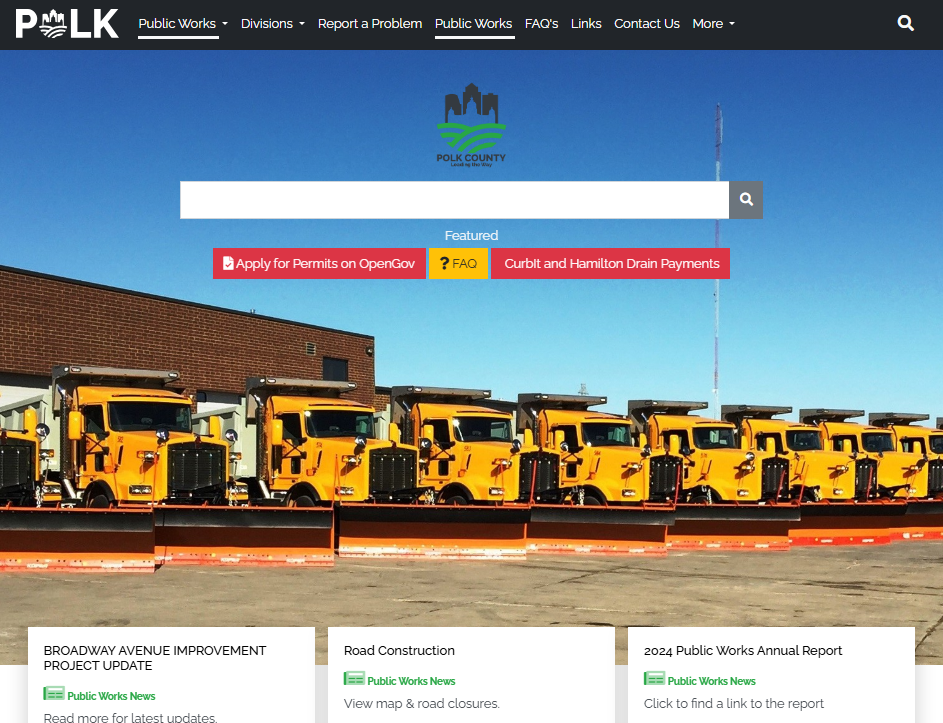
The Polk County Public Works Department in Iowa oversees maintenance and improvement of county infrastructure. This includes roads, bridges, water systems, and stormwater management. The department works on both routine maintenance and large-scale projects that improve safety and efficiency. Each project is planned to support residents, businesses, and travelers while maintaining environmental and regulatory standards.
Coordination with Boards, Commissions, and Residents
Effective infrastructure requires collaboration. The department works closely with county boards, planning commissions, and local residents to prioritize projects. Public input helps shape transportation plans, utility upgrades, and environmental initiatives. Regular meetings and updates keep stakeholders informed and ensure that community needs are reflected in county operations. This cooperative approach ensures transparency and promotes well-maintained roads, safe drinking water, and clean air.
Divisions
Polk County Public Works is organized into specialized divisions:
- Engineering & Operations: Plans and constructs roads, bridges, and transportation systems. It monitors traffic safety and ensures efficient movement of goods and people.
- Water Resources: Manages stormwater systems, flood control, and watershed protection. This division safeguards water quality and reduces flood risks.
- Air Quality: Monitors pollution levels and implements programs to maintain healthy air standards. Residents are informed about air quality initiatives and regulations.
- Planning & Development: Coordinates long-term infrastructure projects, zoning, and growth planning. This division supports smart land use and efficient transportation networks.
- Sanitary Sewer: Maintains sewer systems, wastewater treatment, and environmental compliance. Proper management prevents contamination and protects public health.
Polk County Public Works also tracks ongoing county projects, including road resurfacing, bridge repairs, and utility expansions. With a focus on transportation, utilities, and public infrastructure, the department ensures residents have safe roads, clean water, and effective sewer systems.
Keeping Travel Safe: Roads, Bridges, and Snow
Polk County ensures safe travel by maintaining roads, bridges, https://www.polkcountyiowa.gov/public-works/divisions/engineering-operations/ and removing snow efficiently. Regular updates and seasonal operations keep residents informed and drivers protected.
Engineering & Operations Role
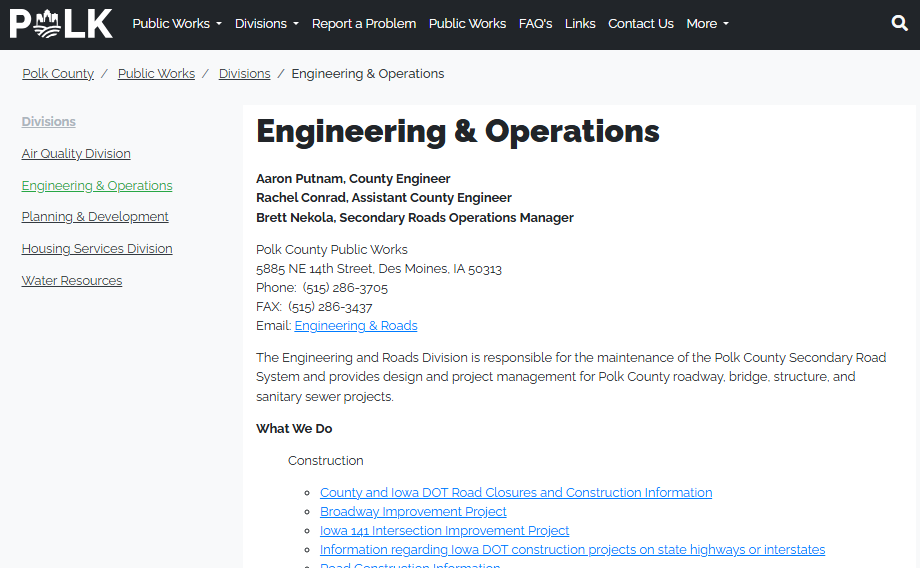
The Polk County Public Works Department oversees road and bridge maintenance, traffic safety, and construction projects. Their engineering team plans upgrades, inspects infrastructure, and monitors traffic patterns to reduce hazards. Operations crews handle daily upkeep, including patching potholes, grading gravel roads, and maintaining drainage systems. Together, these teams coordinate work to keep transportation flowing safely for commuters and freight.
Responsibilities include:
- Inspecting bridges and roadways for damage
- Scheduling resurfacing and repairs
- Maintaining gravel and secondary roads
- Managing traffic signage and signals
Construction Updates and Closures
Construction projects can affect travel throughout Polk County. Residents can view the interactive construction map online for real-time updates on closures, detours, and ongoing projects. This tool shows locations of resurfacing, bridge repairs, and utility work. By consulting the map before driving, motorists can plan routes and avoid delays.
Benefits of checking updates:
- Stay aware of temporary detours
- Reduce travel time during peak hours
- Avoid work zones for safer driving
Seasonal Operations: Snow, Ice, and Maintenance
Winter conditions demand focused efforts on snow and ice removal. Polk County uses plows, salt, and sand to keep roads safe and passable. Crews prioritize major highways, school routes, and emergency access roads before secondary streets. Seasonal maintenance also includes clearing drainage paths to prevent flooding in spring and performing pothole repairs.
Winter safety priorities:
- Snow plowing on main and secondary roads
- Salt and sand application for icy patches
- Gravel maintenance after freeze-thaw cycles
- Inspecting bridges for ice hazards
Protecting Property: Drainage and Floodplain Management
Proper drainage management in Polk County helps prevent property damage and maintain safe stormwater flow. Floodplain permits ensure that development near waterways meets safety standards and reduces flood risks.
Water Resources Responsibilities
Polk County Public Works oversees water resources to keep communities safe and resilient. This includes managing stormwater systems, ditches, culverts, and retention areas to prevent erosion and flooding. Teams monitor water levels during https://www.polkcountyiowa.gov/public-works/water-resources/ heavy rainfall and implement projects to improve water flow across the county. Residents rely on these services to protect homes, roads, and farmland from water damage. Regular assessments help the county identify areas that need repairs or upgrades before serious problems occur.
Floodplain Rules and Permitting Process
The county enforces strict floodplain rules to protect people and property. Any construction or significant land changes within a floodplain require floodplain permits, which evaluate risks and ensure compliance with safety standards. Permitting considers local waterways, historical flood data, and the impact on nearby properties. Applicants must provide plans showing how drainage and stormwater will be managed to prevent flooding. These measures reduce property loss and support long-term resilience.
Drainage Inspections and Maintenance
Routine inspections keep Polk County’s drainage systems functional. Public Works staff check culverts, ditches, stormwater channels, and drainage easements for blockages or erosion. Maintenance includes cleaning debris, repairing damaged infrastructure, and monitoring water flow after storms. Homeowners can report drainage issues to the county, helping staff address problems quickly and prevent localized flooding.
Watershed Planning & Long-Term Projects
Long-term watershed planning ensures that Polk County adapts to changing rainfall patterns and development. Public Works coordinates projects like stormwater retention basins, creek restoration, and flood mitigation initiatives to protect neighborhoods and farmland. These efforts often involve multiple agencies and community input to balance safety, environmental health, and land use. Ongoing projects improve water quality, support wildlife habitats, and strengthen the county’s capacity to handle severe weather events.
Breathe Easier: Air Quality and Environmental Safety
Polk County actively monitors and enforces air quality standards to protect public health and the environment. Residents and businesses follow clear rules for emissions, open burning, and environmental permits to keep the air safe.
Air Quality Division Overview
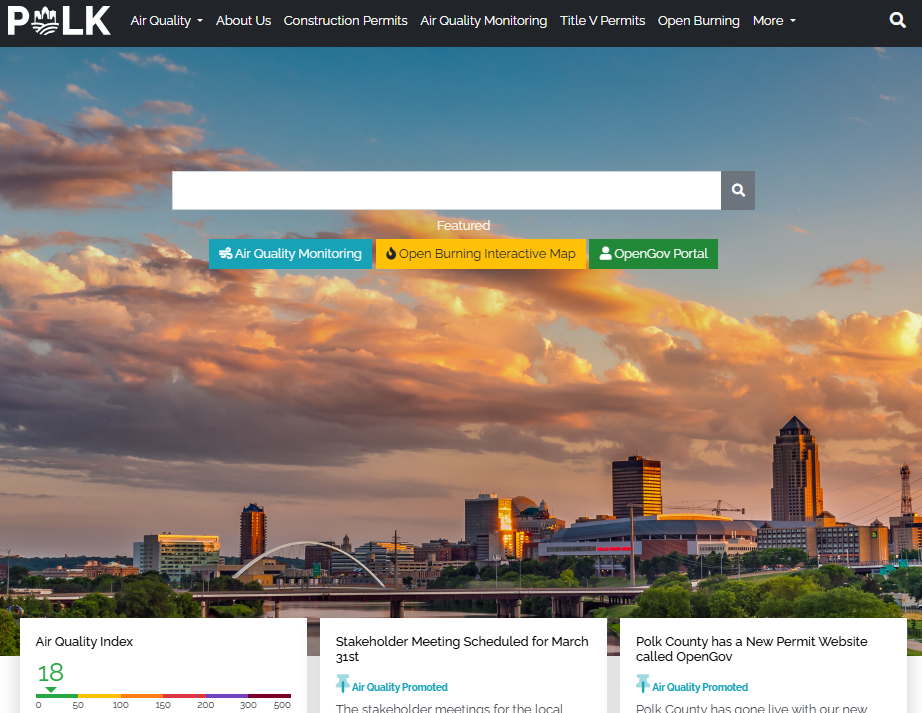
The Polk County Air Quality Division enforces state and federal air regulations, https://www.polkcountyiowa.gov/public-works/air-quality/ including the Clean Air Act, by monitoring emissions, inspecting facilities, and responding to complaints. The division tracks pollution trends, collaborates with state agencies, and provides guidance to reduce environmental impact while maintaining safe air for all residents.
Pre-Construction & Title V Permits
Businesses planning construction or operational changes must obtain pre-construction or Title V permits to control emissions and comply with environmental standards. These permits ensure facilities meet reporting and monitoring requirements, limit harmful pollutants, and support legal and safe operations for both industrial and commercial activities.
Open Burning Guidelines
Polk County regulates open burning to minimize smoke, ash, and air pollution, requiring permits, safe distances from structures, and restrictions on windy days or sensitive areas. Following these rules helps keep neighborhoods safe, reduces harmful emissions, and protects air quality for the community.
Real-Time Monitoring & AQI Reporting
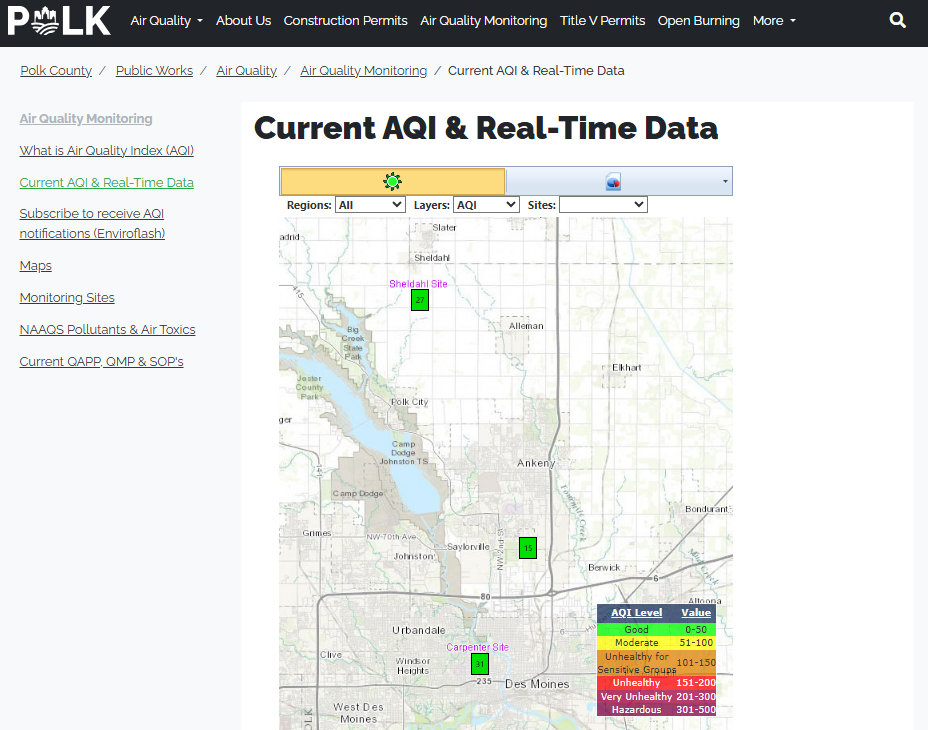
The county uses real-time sensors and reporting systems to track pollutants such as ozone, particulate matter, and nitrogen dioxide, sharing updates through the Air Quality Index (AQI). This allows residents and businesses https://www.polkcountyiowa.gov/public-works/air-quality/air-quality-monitoring/current-aqi-real-time-data/ to make informed decisions about outdoor activities while authorities quickly address pollution spikes to maintain safe air.
Build Responsibly: Zoning, Planning, and Development
Polk County manages growth through clear zoning rules and planning to ensure safe, functional, and attractive communities. Residents and developers must follow local regulations to get projects approved efficiently.
Planning & Development Functions
The Polk County Planning and Development department reviews site plans, https://www.polkcountyiowa.gov/public-works/planning-development/ monitors zoning compliance, and issues permits for residential, commercial, and industrial projects. This office supports growth management and infrastructure improvements while keeping projects aligned with the county’s comprehensive plan and ensuring community input through public hearings.
Boards and Commissions Participation
Several boards, including the Planning and Zoning Commission, Board of Adjustment, and Environmental Advisory Board, oversee land use, variances, and environmental impact. Residents can participate in meetings or submit comments, helping guide development decisions while staying informed about Polk County zoning and planning.
Submittal Tips for Fast Permit Approval
Providing complete site plans, zoning information, and required studies accelerates the permit process. Early communication with staff, timely submission for public hearings, and proper documentation reduce delays and improve approval chances for construction or land use changes.
Cross-Division Coordination
Large projects often involve collaboration between air quality, water management, and road departments to protect public resources and infrastructure. Coordinated reviews of environmental impact, traffic studies, and drainage ensure developments comply with regulations and support safe, long-term growth in Polk County.
Essential Utilities: Sanitary Sewer and Public Services
Polk County provides reliable utility services, including a comprehensive sanitary sewer system that serves residents and businesses efficiently. The county maintains these systems to prevent backups and ensure smooth operation across communities.
Sanitary Sewer Infrastructure
Polk County’s sanitary sewer network includes miles of underground sewer lines that transport wastewater from homes and businesses to treatment facilities. These systems are carefully mapped and monitored to manage flow, prevent overflows, and handle peak capacity during heavy rainfall. The county continually updates infrastructure through planned projects that replace aging pipes, enhance capacity, and reduce the risk of blockages.
Elements include:
- Sewer lines: PVC, concrete, and cast-iron pipes form the main transport network.
- Pump stations: Move wastewater from low-lying areas to treatment plants.
- Manholes and access points: Allow inspection and maintenance without major excavation.
This infrastructure supports public health, protects local waterways, and ensures that residents experience minimal service interruptions.
Reporting Sewer Issues
Residents in Polk County can report sewer problems quickly to prevent damage and service delays. Common issues include backups, slow drainage, or unusual odors. Reporting can be done through the Polk County Public Works website or by phone.
Steps to report an issue:
- Identify the problem type.
- Note the location and severity.
- Submit details to the Public Works department.
Prompt reporting helps the county respond efficiently and reduces potential damage to homes or businesses. Sewer line inspections often follow reports, ensuring any blockage or deterioration is addressed promptly.
Utility Maintenance Planning
Polk County follows a structured maintenance schedule for all public utilities. Regular inspections and cleaning of sewer lines prevent blockages and extend the lifespan of infrastructure. Maintenance includes:
- Routine cleaning: Removing debris, grease, and sediments from main lines.
- Capacity planning: Evaluating system usage and planning upgrades.
- Preventive repairs: Replacing worn pipes before failure occurs.
The county also coordinates with contractors on large-scale projects, including pipe replacements and system expansions. By combining preventive maintenance with timely repairs, Polk County minimizes disruptions while keeping utilities safe and efficient.
Report Issues and Track Projects: Online Tools
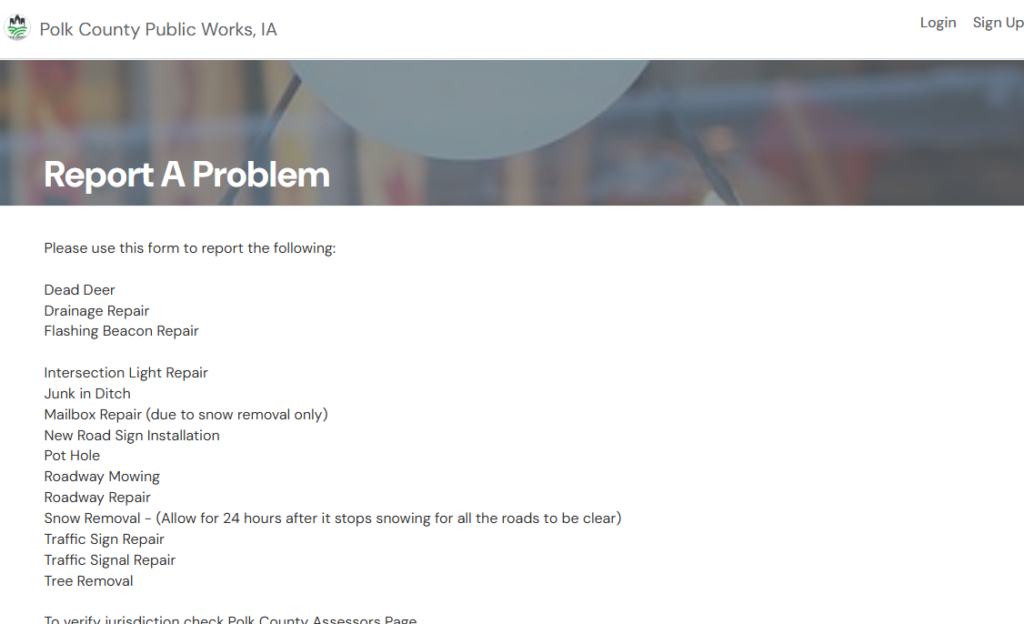
Polk County residents can report public works issues and track ongoing https://polkcountyia.portal.opengov.com/categories/1076 construction projects using the county’s online tools. These digital resources make submitting service requests and monitoring roadwork simple and transparent.
Centralized Service Request Portal
Polk County offers a centralized online portal for all public works reporting. Citizens can submit Polk County service requests for potholes, streetlight outages, or drainage concerns directly through this portal. The system ensures each report is logged and assigned to the right department for faster resolution. The portal also allows residents to attach photos, specify locations, and provide details, which helps the county prioritize and address issues efficiently.
Features include:
- One-stop access for all public works concerns
- Ability to upload images and precise locations
- Automated tracking updates on submitted requests
- Notifications when issues are addressed or resolved
How to File a Report
Filing a report is straightforward and requires just a few steps:
- Visit the Polk County public works online portal.
- Select the type of service request (e.g., pothole repair, streetlight issue, debris removal).
- Fill in the location and description of the issue.
- Attach photos if available to provide better context.
- Submit the request and note the reference number for tracking.
Using this system ensures that all reports are formally logged and can be tracked in real-time. Residents can also update or add information to existing requests if conditions change.
Track Projects and Roadwork
The online tools also provide real-time tracking of county construction projects and permits. Residents can check which streets are under repair, view planned detours, and see timelines for completion. The platform shows updates for construction projects, including utility work and road improvements, helping citizens plan their routes and avoid delays.
Benefits include:
- Up-to-date roadwork maps and project status
- Permit tracking for local developments
- Notifications about upcoming closures or detours
- Improved communication between public works and residents
By combining service reporting with project tracking, Polk County’s online tools create a transparent and interactive system for public engagement. Residents stay informed while the county responds efficiently to community needs.
Permits and Approvals: Streamlined Online Process
Polk County residents and developers can apply for most permits online https://polkcountyia.portal.opengov.com/, saving time and reducing paperwork. This includes permits for construction, air quality, and floodplain management.
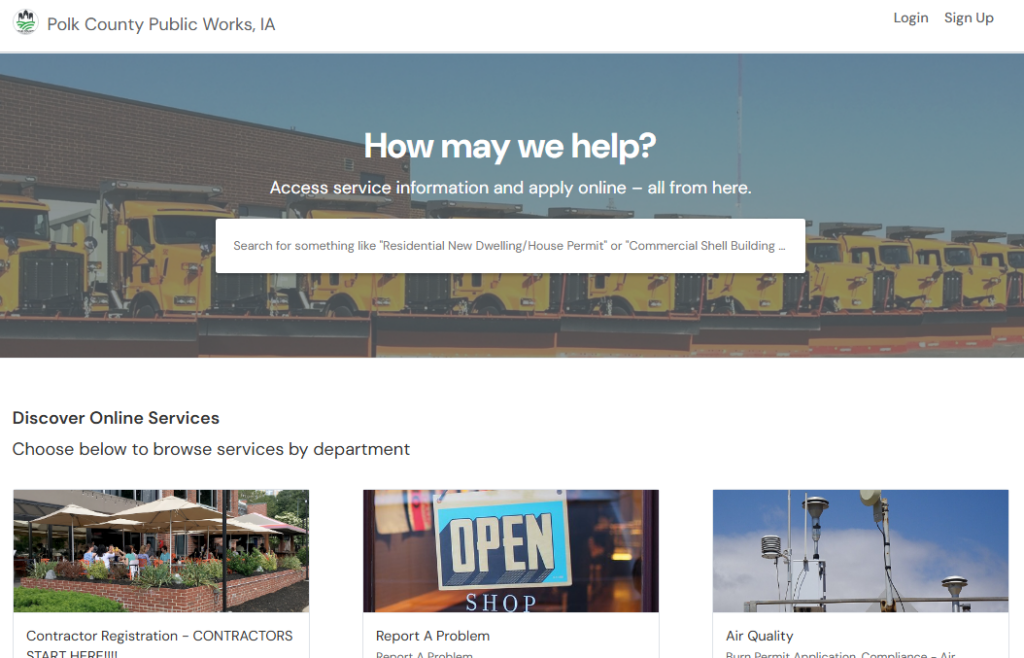
Permit Types Covered
Polk County issues several types of development permits to ensure safe and compliant projects. These include:
- Building Permits: Required for new construction, renovations, or structural changes.
- Floodplain Permits: Ensures construction meets safety regulations in flood-prone areas.
- Air Quality Permits: Needed for activities that could affect local air standards.
- Other Special Permits: Certain projects may require grading, erosion control, or right-of-way permits.
Each permit type has specific requirements, fees, and review timelines. Residents can check the Polk County permits portal for the full list of available permits and any associated regulations.
Online Filing Process
Polk County offers an online system that allows applicants to submit permit requests and supporting documents digitally. The process is straightforward:
- Create an Account: Register on the Polk County development portal.
- Select Permit Type: Choose the correct permit for your project, such as building or floodplain permit.
- Upload Documents: Include plans, drawings, and environmental assessments as required.
- Submit Application: Review fees and submit the application for approval.
- Track Status: Applicants can monitor review progress and receive notifications online.
Online submissions reduce the need for in-person visits and help keep projects on schedule. Many residents report faster responses compared to traditional paper-based applications.
Health & Safety: How Public Works Protects the Community
Polk County Public Works ensures the safety and well-being of residents by maintaining safe roads, reliable infrastructure, and emergency preparedness. Their programs actively reduce risks related to traffic, flooding, and environmental hazards while supporting public safety across Iowa.
Integration of Health Standards in Infrastructure
Public Works designs and maintains roads, bridges, and public facilities to meet high health and safety standards. Traffic safety measures, such as well-marked crosswalks, signal timing, and pedestrian zones, reduce accidents. Infrastructure planning also addresses flood risk prevention, using stormwater systems and levees to protect homes and businesses. Projects are evaluated for their infrastructure health impact on the community, including air quality, noise reduction, and safe access for emergency vehicles.
Points include:
- Roadway and bridge inspections to prevent structural failures.
- Stormwater management systems to reduce flood hazards.
- Design features that minimize environmental and health risks.
Monitoring and Compliance Programs
Polk County Public Works runs ongoing monitoring and compliance programs to ensure community safety. Air and water quality are regularly tested to detect pollutants early, helping residents stay healthy. Emergency alerts and inspections are integrated into these programs to respond quickly to hazards. Public Works also coordinates with state and federal agencies to comply with Iowa public safety regulations.
Monitoring efforts focus on:
- Continuous air quality monitoring near high-traffic areas.
- Flood-prone zone assessments to protect residents and property.
- Inspection schedules for bridges, roads, and public buildings.
Cross-Division Safety Coordination
Safety in Polk County relies on collaboration between multiple divisions, including transportation, environmental services, and emergency management. Public Works communicates with fire, police, and health departments to manage risks efficiently. Training programs and joint drills improve emergency response for events such as severe storms or accidents. This coordination ensures that infrastructure supports both everyday safety and urgent community needs.
Coordination highlights:
- Shared communication platforms for hazard alerts.
- Joint emergency drills and scenario planning.
- Cross-department review of infrastructure projects for traffic safety and environmental impact.
By combining careful planning, monitoring programs, and interdepartmental coordination, Polk County Public Works maintains a safe and healthy community environment. Their work reduces accidents, protects public health, and strengthens community resilience.
Public Engagement: Boards, Commissions, and Feedback
Polk County encourages residents to participate in local government through boards, commissions, and feedback opportunities. Citizens can influence decisions by attending meetings, providing testimony, or submitting comments, which helps shape projects and policies that affect neighborhoods and public spaces.
When and How to Participate
Residents can attend public meetings, hearings, and advisory boards to share their perspectives on county projects, including zoning, road improvements, and environmental planning. Agendas are posted in advance on the Polk County Public Works website, and meetings often allow online participation. Citizens may also submit written comments or speak during public hearings, making their input a key part of the decision-making process.
Preparing Effective Feedback
Effective feedback is clear, concise, and focused on the topic being discussed. Residents should research the issue beforehand, highlight 2–3 main points, and provide written or verbal comments in straightforward language. Well-prepared testimony increases the chances that boards and commissions will consider citizen input when planning public works projects.
Everyday Examples: How Residents and Businesses Use Public Works
Polk County residents and businesses rely on public works services daily to maintain safe roads, manage water flow, and support infrastructure needs. From home projects to industrial operations, public works ensures daily life runs smoothly.
Homeowner Scenario: Small Additions in Floodplain Areas
Homeowners planning small additions near low-lying areas often consult Polk County public works to comply with floodplain regulations and manage stormwater drainage. Staff provide guidance on site planning, inspect construction, and help prevent water damage by coordinating with local drainage systems. Residents also report flooding or drainage concerns to keep their property and neighborhood safe.
Business Scenario: Industrial Equipment and Air Permits
Businesses depend on public works to manage air quality permits, coordinate utility access, and receive updates on road or construction work that might affect operations. Public works helps companies maintain compliance, manage industrial runoff, and plan deliveries efficiently around ongoing infrastructure projects.
Neighborhood Scenario: Drainage and Maintenance Issues
Neighborhoods use public works for clearing blocked culverts, repairing streets, and improving drainage to prevent flooding and erosion. Residents report issues through hotlines or online tools, allowing crews to respond quickly and maintain safe, functional streets and stormwater systems.
FAQs – Polk County Public Works
Polk County Public Works provides essential services to maintain roads, manage public infrastructure, and support safe community operations. Residents can quickly find answers to common questions about permits, road conditions, and ongoing projects.
How can I find current road closures in Polk County?
Road closures are updated regularly to inform residents about construction, maintenance, or emergency situations. Polk County maintains an online road closure map where users can check affected areas, detours, and expected reopening dates. Staying informed helps residents plan safe travel routes and avoid delays.
How do I track a public works permit request?
Residents or businesses applying for permits, such as excavation, street cuts, or utility connections, can track their requests through the county’s permit tracking system. This tool shows the permit status, processing stage, and any additional requirements, helping users anticipate approvals or needed revisions.
What are the rules for open burning in Polk County?
Open burning is regulated to prevent fires and air quality hazards. Residents must follow the open burning guidelines, which specify allowable materials, required permits, and seasonal restrictions. Violating these rules can result in fines or enforcement action. Check the Burning section for detailed instructions.
How do I report a street or pothole issue?
Polk County encourages residents to report potholes, damaged signs, or drainage issues through the service request portal. Providing precise location details and photos speeds up repairs and helps prioritize urgent problems. Regular reporting contributes to safer streets across the county.
Where can I see updates on ongoing public works projects?
Project updates, including road improvements, bridge maintenance, and infrastructure enhancements, are posted on the project updates page. Each entry includes timelines, expected impacts, and contact information for project managers. Keeping track of updates allows residents to plan travel and stay informed about community improvements.