The Polk County Jail in Iowa serves as the primary detention center for Polk County, housing individuals awaiting trial, serving short sentences, or involved in court-related procedures. This facility maintains comprehensive inmate records, enforces strict safety measures, and ensures orderly operations. Families, legal representatives, and community members rely on this information for accurate updates about inmate status, charges, bond details, and scheduled court appearances.
Located in Des Moines, the jail operates under the Polk County Sheriff’s Office, providing structured programs for inmates, including basic education, counseling, and supervised recreation. Visitors must follow clear protocols for entry, identification, and behavior to maintain security. Arrest records, public safety notifications, and inmate tracking tools are available to authorized users, enhancing transparency and accountability. With a daily population often exceeding 1,000, the facility focuses on operational efficiency, inmate welfare, and secure management of all activities.
What is the Polk County Jail?
Polk County, Iowa, Jail serves as the primary detention center for central Iowa, housing pretrial detainees and sentenced inmates. It operates under a direct supervision model to maintain safety, efficiency, and structured inmate management.
Facility Location and Size
The Polk County, Iowa, Jail is located at 1985 NE 51st Place, Des Moines, IA, conveniently accessible from major highways and the city center. The facility occupies a multi-level building designed to accommodate a growing inmate population. Current bed capacity allows housing of approximately 600 inmates, with ongoing expansion plans aimed at increasing capacity while improving living and security conditions.
The facility includes several essential on-site services:
- Medical unit providing 24/7 health care and emergency response
- Laundry services to maintain hygiene and inmate clothing
- Kitchen and dining areas serving balanced meals for all residents
These services support daily operations and ensure inmates receive necessary care during their stay.
Direct Supervision Model
Polk County Jail uses a direct supervision model, meaning correctional officers are stationed inside inmate housing units rather than monitoring from outside barriers. Staff-in-unit presence allows officers to:
- Observe behavior continuously and respond quickly to incidents
- Foster positive interactions that encourage compliance with rules
- Reduce incidents of violence and misconduct
This approach improves safety for both inmates and staff while supporting structured routines and orderly management of the jail population.
Modern Safety Measures
The facility integrates advanced security features to maintain control and safety:
- Surveillance cameras throughout common areas and corridors
- Controlled access points and secure perimeters
- Regular staff training in crisis response and inmate supervision
These measures enhance correctional operations and support consistent inmate management.
How to Search the Polk County Jail Roster
Finding current inmates at the Polk County Jail is straightforward. Users can check the official jail Des Moines Iowa roster online to get real-time inmate info and custody status.
Current Inmate Listing – Steps to Check Custody
The Polk County Jail maintains an official roster that lists all individuals currently in custody. To access it:
- Visit the https://www.polkcountyiowa.gov/county-sheriff/detention/jail-and-arrest-information/ or use the jail’s online portal.
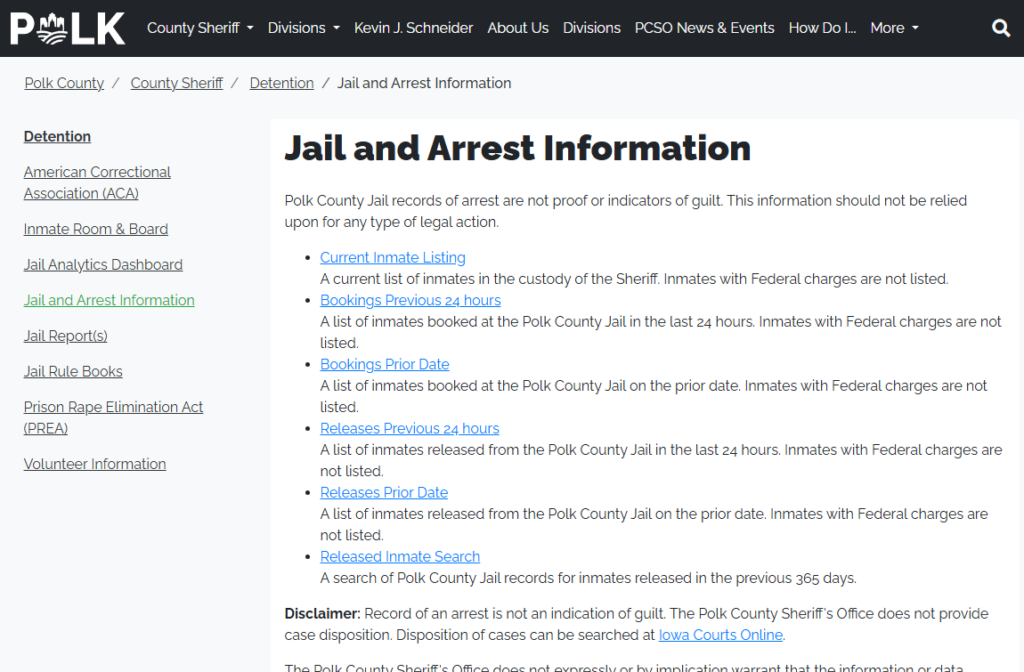
- Search by full name, booking number, or date of birth.
- Review details such as charges, booking date, bond amount, and housing location.
This roster allows residents, family members, and legal representatives to verify custody quickly. It is updated regularly to reflect new arrests and releases. For case-specific verification, users can check the Iowa Courts Online system, which provides court dates and legal status.
Bookings in Last 24 Hours – Details, Time-Stamped Info
The jail provides a section showing all bookings in the past 24 hours, offering a snapshot of recent arrests. Each entry includes:
- https://polkinmates.polkcountyiowa.gov/Inmates/Bookings/Previous24Hours
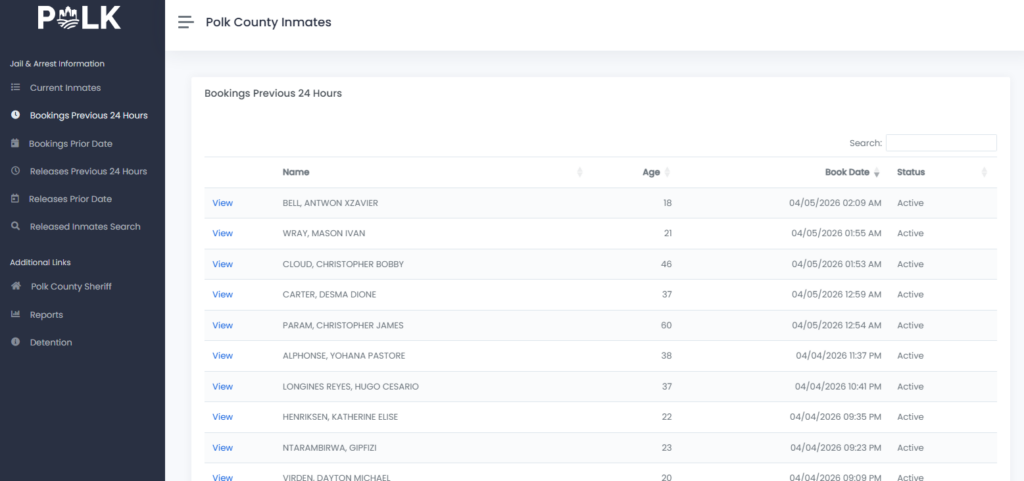
- Name of the inmate
- Booking time and date
- Charges filed
- Bond or hold status
This section helps track recent activity and provides an up-to-date record of who entered custody. Users can also use this information to follow any immediate arrest records or law enforcement reports.
Releases in Last 24 Hours – Process, Tracking Outcomes
Information on releases in the last 24 hours shows who has been discharged from custody. Key points include:
- https://polkinmates.polkcountyiowa.gov/Inmates/Released/Previous24Hours
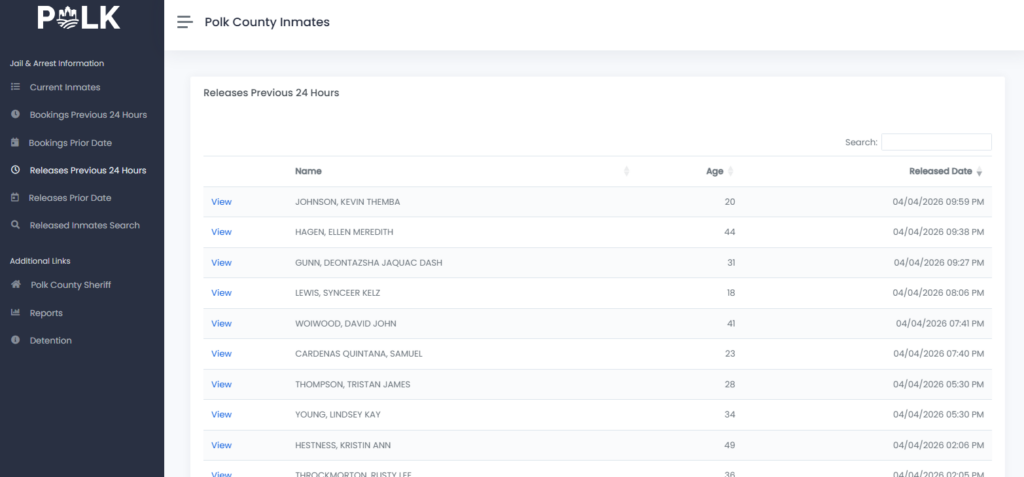
- Name of the released individual
- Release time and date
- Reason for release (bond, court order, or other)
- Follow-up actions if applicable
This section ensures the public can track recent outcomes and verify the accuracy. Tracking releases also helps family members or attorneys confirm a person’s current legal status.
Prior-Date Searches – How to Research Older Bookings/Releases
Polk County Jail allows searches for older bookings and releases using prior dates. Users can:
- Enter a specific date range on the official roster page
- Filter by name, charges, or booking type
- Review detailed historical custody records
These searches are useful for background checks, legal research, or verifying prior arrest records. Combining these searches with official court verification ensures the data is correct and reliable.
Visiting the Polk County Jail – Rules and Hours
Visitors at the Polk County Jail in Iowa can schedule visits during set hours and must follow strict rules for safety and security. All visitors are required to present valid identification and comply with the jail’s entry procedures to meet with inmates.
Visitation Schedule – Lobby Hours and Rules
The jail maintains structured visiting hours to manage inmate and visitor flow. Lobby hours for general inquiries and check-ins are typically from 8:00 a.m. to 4:30 p.m., Monday through Friday. Weekend visitation may be limited, with pre-approved times for certain housing units.
- https://www.polkcountyiowa.gov/county-sheriff/how-do-i/visiting-an-inmate/
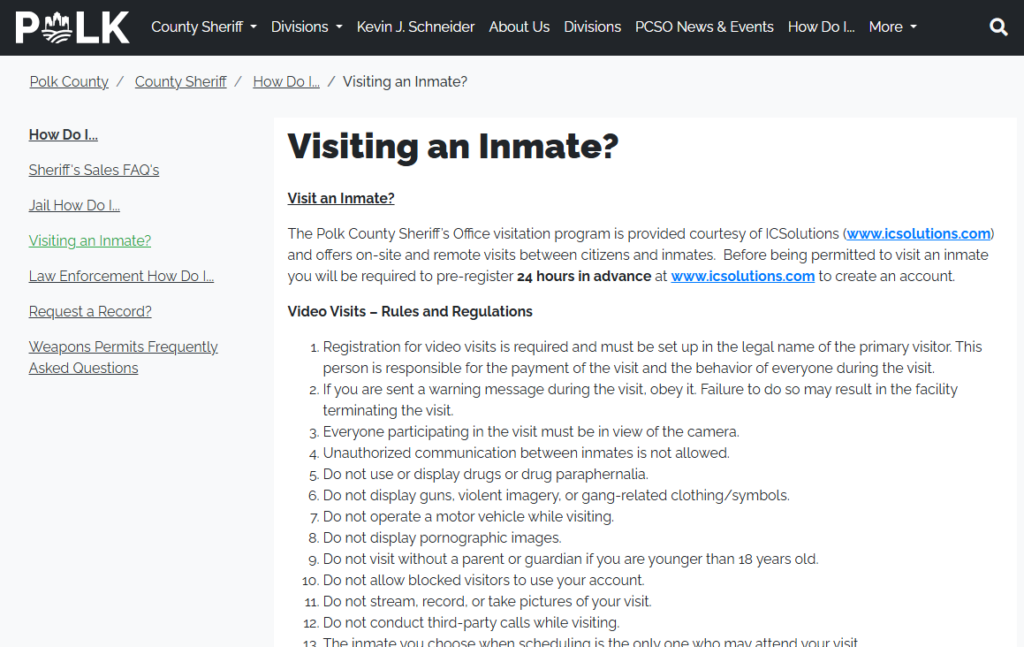
- Weekday visits are generally arranged in 30-minute or 60-minute sessions, depending on inmate housing and availability.
- Visitors should arrive 15–20 minutes early to allow for check-in and security screening.
- Some inmate units may require appointment-based visits only, so calling ahead is recommended.
This schedule ensures controlled movement inside the facility and keeps visitation organized while maintaining safety for all parties.
ID & Security Requirements – Dress Code, Prohibited Items, Arrival Times
Security at Polk County Jail in Iowa is strict to protect inmates, staff, and visitors. All visitors must bring government-issued photo identification. Common forms include a driver’s license, state ID, or passport.
- Dress Code: Clothing should be modest and free of offensive graphics. Items like tank tops, short skirts, and revealing clothing are not allowed.
- Prohibited Items: Visitors may not bring bags, phones, cameras, weapons, or any contraband into the facility. Lockers or secure storage are provided in the lobby.
- Arrival Times: Visitors must arrive early enough to complete security checks. Late arrivals may be denied entry to maintain the schedule.
These measures ensure smooth jail entry and help maintain inmate access and safety.
Scheduling and Verification – Official Processes and Booking Visits
To schedule a visit at the Polk County Jail in Iowa, visitors must follow official procedures. Visits can be booked by phone or through the jail’s online system, depending on the inmate’s housing unit.
- Only individuals on the inmate’s approved visitor list are allowed.
- Verification includes confirming the visitor’s identity and the inmate’s current housing status.
- Visits are recorded and monitored for safety, with controlled movement enforced throughout the facility.
These procedures help prevent misunderstandings and ensure a positive experience for both visitors and inmates. Maintaining compliance with the jail’s rules is critical for smooth visitation.
Inmate Communication: Mail, Money, and Property
Polk County, Iowa Jail provides inmates with ways to receive mail, manage money for commissary, and handle personal property. Friends and family can send letters, deposit funds, and track belongings following clear jail rules.
Sending Mail – Addressing Rules, Content Limits, Inspection
Inmates at Polk County, Iowa, Jail can receive letters and postcards, but all correspondence must follow specific rules. Each item should include the inmate’s full name, ID number, and the facility address. Mail that contains contraband, offensive language, or promotional material may be rejected or returned.
Points for sending mail:
- https://www.polkcountyiowa.gov/county-sheriff/detention/jail-rule-books/
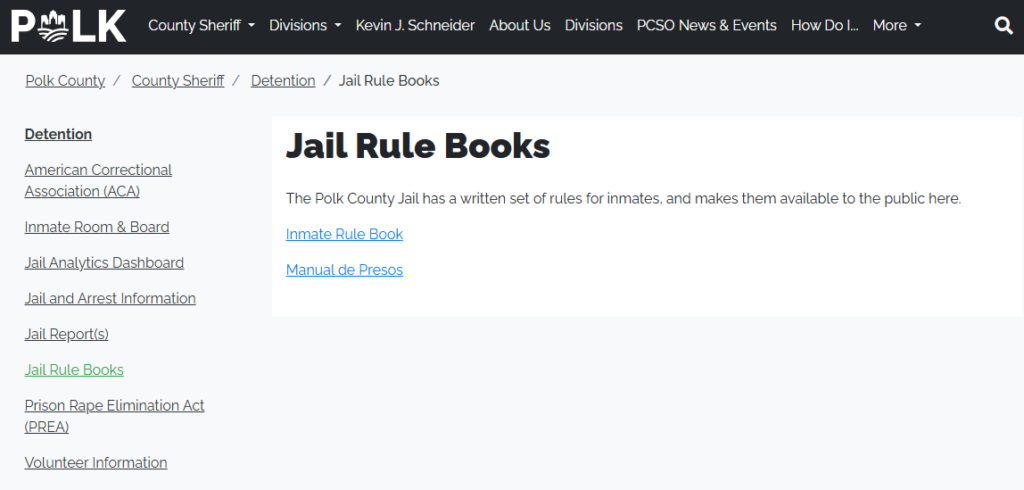
- Address clearly: Include the inmate’s full name, ID, and Polk County, Iowa Jail address.
- Acceptable content: Letters, greeting cards, and photos within size limits.
- Prohibited items: Polaroid photos, stamps, cash, or items glued to letters.
- Inspection: Jail staff routinely inspects all mail to ensure safety and compliance.
Following these rules helps ensure letters reach inmates without delays and maintains safe communication. Inmates often rely on mail for emotional support, making proper handling important.
Money Deposits & Commissary – Payment Options, Limits, Timing
Inmates at Polk County, Iowa, Jail can access commissary funds through deposits made by family or friends. These funds allow inmates to buy snacks, toiletries, and small personal items.
Depositing money options include:
- Online transfers: Secure websites approved by the facility.
- Kiosk deposits: On-site machines in the jail lobby.
- Mail: Money orders only, no cash or personal checks.
Rules for commissary accounts:
- Limits: Deposits may have daily or weekly caps.
- Processing time: Online deposits usually post within 24 hours; mailed money orders may take longer.
- Account tracking: Inmates can see available funds on commissary slips issued with purchases.
Proper management of commissary funds helps inmates maintain comfort and access to small necessities while incarcerated.
Inmate Property & Personal Items – Storage, Retrieval, Lost Property
Personal property brought to the Polk County, Iowa, jail is securely stored. Items not permitted inside the facility are returned or stored until release. Inmates can retrieve their property upon discharge, and any lost items can be reported immediately.
Important points:
- Allowed items: Clothing, approved hygiene products, and legal documents.
- Prohibited items: Electronics, weapons, and unauthorized personal effects.
- Lost property: Report missing items to jail staff; a property claim may be required.
- Property retrieval: Family members may collect certain items after release with proper identification.
Clear property rules reduce disputes and help maintain a safe environment for staff and inmates.
Booking, Release, and Court Procedures
The Polk County Jail in Iowa manages all inmate bookings, releases, and court processes with clear procedures. The Jail in Des Moines, Iowa, ensures safety, accurate records, and coordination with courts for every individual in custody.
Booking Process – Identity Verification, Medical Screening, Classification
When an individual is brought to Polk County Jail, the booking process begins immediately. Staff verifies the person’s identity using official documents and fingerprints. A medical screening checks for any urgent health needs and ensures medications are documented. Next, the jail completes classification, assigning inmates to the appropriate housing based on security level, gender, and medical conditions. This process also records custody details, arrest date, and any prior jail history. The booking timeline can vary, but most initial processing is completed within a few hours.
Steps in booking include:
- Identity verification – photo ID, fingerprints, personal information
- Medical and mental health screening – documenting medications, urgent conditions
- Classification – housing assignments, custody level, security needs
- Property inventory – belongings logged and stored safely
Legal Status Verification – Arrest ≠ Guilt, Iowa Judicial Branch Links
Being booked into the Polk County Jail in Iowa does not indicate guilt. Each inmate has a legal right to a court process where evidence is reviewed, and charges are determined. The jail provides arrest records and custody details, but court dates and legal status can be confirmed through the Iowa Judicial Branch. This ensures public information aligns with the law and protects the rights of individuals.
For example:
- Court appointments are scheduled after booking.
- Charges may be adjusted or dropped based on judicial review.
- Legal resources are available through official state links for accuracy.
Release & Transfers – Prior-Date Lookup, Inter-Agency Transfers, Court Coordination
Releases from Jail in Des Moines, Iowa, occur after bail is posted, charges are dismissed, or a sentence is completed. Staff coordinates with courts and other agencies for inter-agency transfers when an inmate moves between facilities. Prior-date lookups help confirm scheduled release dates, ensuring records are accurate. The jail also maintains communication with attorneys and courts for pending hearings.
Common aspects of release and transfer include:
- Scheduled release based on court order or time served
- Inter-agency transfers to state or federal facilities
- Court coordination for hearings, appearances, and legal documentation
The combination of clear booking steps, legal verification, and organized release ensures the Polk County Jail in Iowa operates efficiently and safely. Inmates, families, and legal representatives benefit from timely records, coordinated court appointments, and detailed custody information.
Jail Analytics Dashboard and Trends
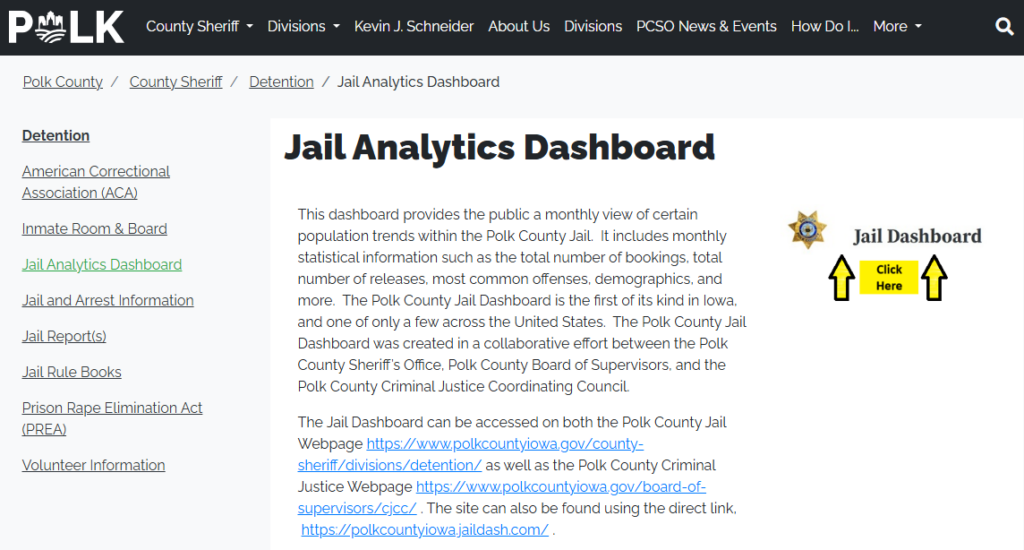
The Polk County, Iowa, detention center provides clear insights into inmate info and jail operations. Its analytics dashboard tracks bookings, releases, and population trends to help families, legal teams, and staff plan effectively.
Monthly Bookings & Releases – Charts & Trends Explained
Monthly charts display how many individuals are booked and released each month. These visual trends reveal peak periods, which often occur during weekends and holidays. Tracking booking numbers helps staff manage resources and anticipate capacity needs. For families and legal teams, these trends can indicate when the facility is busiest, making planning visits or coordinating court schedules smoother.
Points from monthly trends:
- https://www.polkcountyiowa.gov/county-sheriff/detention/jail-analytics-dashboard/
- Average monthly bookings: roughly 350–400 individuals.
- Typical length of stay varies by offense type.
- Release peaks usually follow scheduled court sessions.
Using graphs and tables to track these numbers provides a quick snapshot of the jail population and helps highlight seasonal fluctuations.
Offense & Demographic Data – Interpret for Families/Legal Teams
The dashboard also breaks down inmates by offense type and demographics, including age, gender, and prior convictions. Understanding these patterns helps legal teams anticipate caseloads and prepare cases efficiently. Families can also use this data to stay informed about general population trends without accessing personal records.
Example trends observed:
- Most common offenses: property crimes, drug-related charges, and minor assaults.
- Age groups: 25–34 years old represent the largest segment.
- Gender distribution: approximately 75% male, 25% female.
This inmate demographic data highlights patterns in the detention center population, making it easier to track shifts over time and better plan for legal or personal interactions.
Using Data for Planning – Peak Periods, Court Prep, Visitation Timing
Analytics support decision-making for court appointments, visitation, and staffing schedules. By noting peak periods, families can schedule visits during quieter times, and legal teams can anticipate when staff are most available for hearings. Population trends also guide planning for program participation or temporary transfers.
Practical uses of jail analytics include:
- Identifying low-traffic days for easier visitation.
- Planning court appearances around peak booking periods.
- Monitoring long-term population trends for program or staffing adjustments.
By observing these statistics, stakeholders can make informed choices without needing direct access to sensitive inmate records. Data-driven planning improves efficiency and helps maintain smoother operations within the Polk County, Iowa detention center.
Rules, Conduct, and Preventing Issues at Polk County Jail, Iowa
Polk County Jail in Iowa maintains clear rules to ensure safety, order, and fair treatment for all inmates. Following daily schedules, behavior expectations, and disciplinary guidelines helps prevent problems and promotes a smooth experience inside the facility.
Jail Rule Books – Daily Schedules, Privileges, Discipline
The Polk County Jail rule book outlines what inmates can and cannot do each day. It covers daily schedules, including meal times, recreation periods, and headcounts. Inmates are expected to follow direct supervision compliance, which means staff monitor interactions and enforce safety measures consistently. Privileges in the jail, such as phone use, visitation, and recreation, are earned through good behavior. Disciplinary rules are clear: verbal warnings, loss of privileges, or confinement may be applied if an inmate violates conduct standards.
Behavior expectations include:
- Maintaining respectful communication with staff and fellow inmates
- Following instructions promptly
- Keeping living areas clean and orderly
- Avoiding physical or verbal confrontations
Adhering to these rules helps inmates maintain privileges and avoid conflicts. Staff regularly update rules to reflect safety and security needs while balancing fair treatment.
Grievance & Complaint Procedures – Filing Complaints, Official Channels
Inmates have the right to voice concerns or report issues without fear of retaliation. Polk County Jail in Iowa provides formal grievance procedures that ensure complaints are documented and reviewed. The process typically involves:
- Submitting a written complaint using a designated form
- Delivering the form to a staff member or grievance officer
- Receiving an official response within a specified timeframe
Common issues addressed through grievances include medical care, facility conditions, or disputes with other inmates. Staff are trained to handle complaints professionally while maintaining safety.
Room and Board Billing & Appeals
How room and board billing works at the Polk County, Iowa, Jail is crucial for families and inmates managing financial responsibilities. The facility follows structured guidelines to ensure that all billing is transparent and compliant with state regulations. Charges are assessed based on an inmate’s daily stay, and accurate record-keeping helps both the facility and families track financial obligations effectively.
Billing Policies – Iowa Code 356.7, Timeline for Payment
The jail’s billing procedures are governed by Iowa Code 356.7, which sets standards for charging inmates for room and board. Bills are typically calculated from the date of intake to the release date and are issued promptly after processing. Inmates or their representatives usually receive a statement detailing daily rates, total charges, and any applicable deductions. Payment timelines are clearly defined, and failure to settle the balance within the designated period may result in additional administrative steps. Staying informed about these policies helps prevent unnecessary penalties or delays in processing inmate info.
Payment Methods – In-Person, Mail
Payments for room and board at the Polk County, Iowa, jail can be made through multiple channels for convenience. Families or inmates may pay in person at the jail’s finance office, ensuring immediate posting of funds. Alternatively, payments can be sent via mail, including money orders or certified checks made payable to the jail. Electronic payment options may also be available, subject to facility rules. Keeping a record of all payments and confirmations is important, as it safeguards against errors and facilitates proper accounting for financial obligations.
Appeals & Disputes – Filing Applications, Court Review
If an inmate or family member believes that charges are incorrect, they have the right to file an appeal. Review applications are submitted through the jail’s administrative office and are forwarded for court-approved claims verification. The review process may involve documentation of payments, disputes over billing dates, or claims for reimbursement. Courts evaluate these applications carefully to determine whether adjustments are warranted. Promptly initiating appeals ensures that any discrepancies in billing are addressed efficiently, protecting the rights of both the inmate and the facility.
Contact Information and Departments
The Polk County Jail in Iowa can be reached directly through several key departments for inquiries, emergencies, or official matters. Residents and families can use the jail phone number for immediate questions or to connect with the appropriate office.
Polk County Jail operations are organized into specific departments, each handling different responsibilities. The Administration Office manages inmate records, facility operations, and official communications. For legal or civil matters, the Civil Department processes subpoenas, warrants, and official notices. The Communications Division handles dispatch and emergency responses, ensuring law enforcement teams respond quickly. Law enforcement questions or reports are directed through the Law Enforcement Department, which oversees policing, arrests, and investigative services. Visitors or general inquiries can also use the Lobby Phone to reach staff on-site for immediate assistance.
Key Polk County Jail Contacts:
| Department | Purpose | Phone Number |
|---|---|---|
| Administration | Inmate records, operations | (515) 286-3800 |
| Civil | Subpoenas, legal notices | (515) 286-3700 |
| Communications | Emergency dispatch, inquiries | (515) 286-3400 |
| Law Enforcement | Police reports, investigations | (515) 286-3300 |
| Lobby Phone | Visitor inquiries, immediate assistance | (515) 286-3800 |
(FAQs) About Polk County, Iowa Jail
The Polk County, Iowa Jail provides clear steps for checking custody, sending mail, visiting inmates, and handling billing. Families can rely on official guidance and verified jail rosters to get accurate inmate info quickly.
How to Check Custody?
Inmate custody can be confirmed through the Polk County Jail roster or by phone. Visitors should provide the inmate’s full name and date of birth to get precise info. The online roster lists all detainees, including booking dates, charges, and release status. Jail staff also assist legal representatives needing verification. Using official sources ensures families and friends receive reliable inmate info without confusion.
Mail & Property Rules?
All inmate mail must comply with jail rules to be accepted. Letters need the inmate’s full name and booking number, while packages are limited to approved vendors. Contraband or prohibited items are returned or rejected. Personal property may be stored at the jail or returned after release. Following these instructions helps mail and packages reach inmates safely and on time.
Visitation Procedures?
Visiting requires scheduling and following security rules. Appointments can be booked online or by phone, and all visitors must present a valid photo ID. Clothing must comply with the dress code, and behavior must follow staff instructions. Visits are monitored to maintain safety, with special provisions for legal or emergency visits. Adhering to these rules ensures a smooth visiting experience.
Booking and Release?
Booking involves intake, fingerprinting, and temporary cell assignment, usually completed within hours. Release depends on bail, bond, or court orders. Attorneys can contact jail staff for procedural verification. Knowing these steps helps families plan transportation and communication. Accurate information prevents unnecessary delays or misunderstandings during the inmate’s stay.
Room & Board Billing?
Inmates may incur daily charges for meals and housing, billed according to their length of stay. Payments can be made online, by mail, or at approved kiosks. Families can check balances or transaction history through official channels. Clear billing policies help prevent confusion and ensure transparency. Using sheriff instructions and verified info supports smooth management of all inmate expenses.